
An apartment or townhome community uses its fences harder than a single-family yard does. Perimeter lines face traffic, pool gates open hundreds of times a week, trash enclosures take truck hits and walkway gates are used by every resident and every delivery driver. A good fence plan reduces complaints and liability. A bad one produces service calls every month. This page is for property managers, owners, asset managers, HOA and condominium boards and developers working in Katy, Fulshear, Cypress, Richmond and the surrounding area. We quote the work described below. Our general commercial page is commercial and HOA fencing.
Where fences matter on a multifamily property
| Area | What it needs to do | What to settle early |
|---|---|---|
| Perimeter | Mark the property line, screen neighbors and the street, deter shortcuts | Material and height, who owns the line, any city or HOA rules, utility and drainage easements |
| Pool enclosure | Keep unsupervised children and the public out | Pool class, local health authority rules, gate hardware, no climbable features |
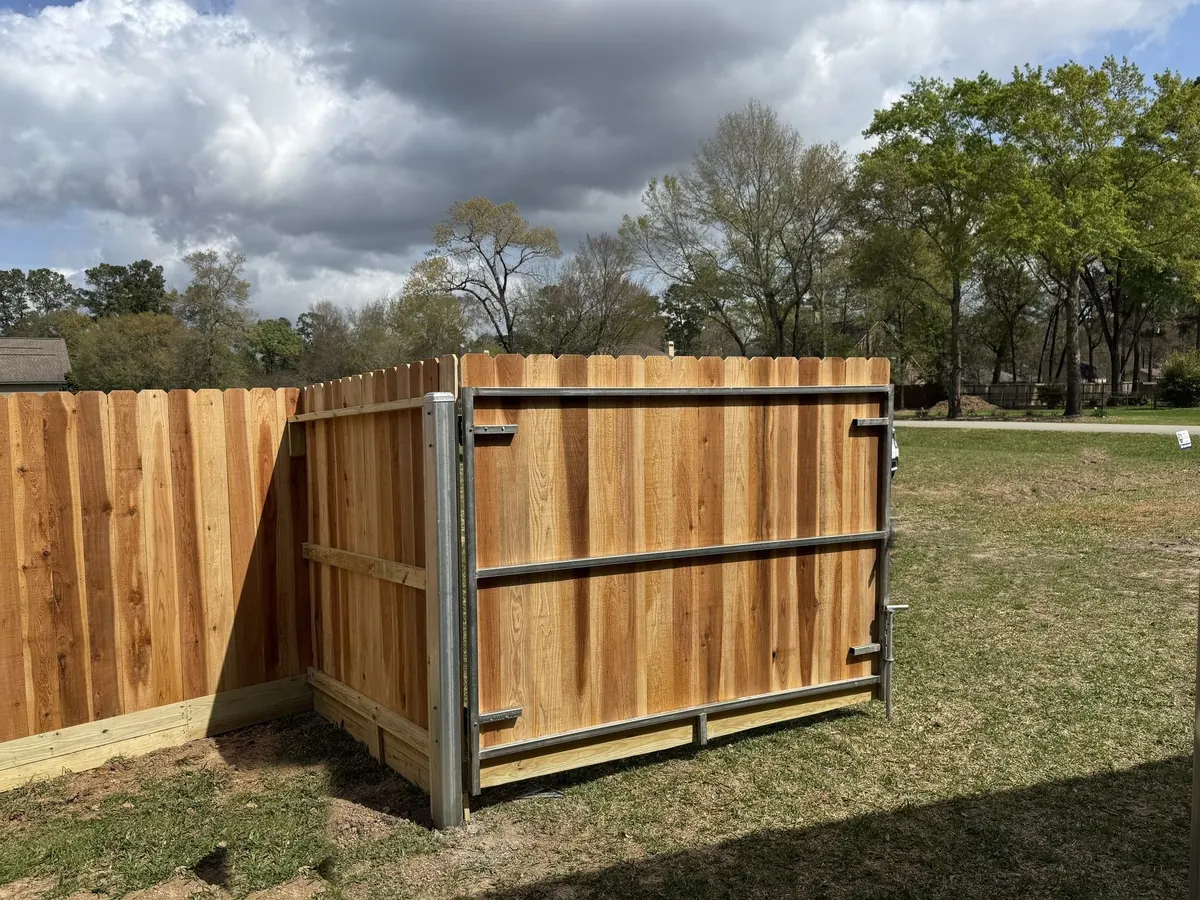
| Dumpster and trash screens | Hide bins and take truck impact | Bin size, hauler path, steel posts and bracing. See dumpster enclosures |
| Vehicle entry gates | Control who drives in, keep traffic orderly | Swing or slide, operator, access control, emergency access |
| Pedestrian gates | Control who walks in, route residents to the right door | Latches, keypads or fobs, self-closing hardware, accessibility |
| Courtyards, dog parks and playgrounds | Contain pets and children | Height, gaps, gate latches, materials that tolerate wear |
| Between buildings | Privacy for ground-floor patios | Matching existing fence style, view lines |
Perimeter fencing
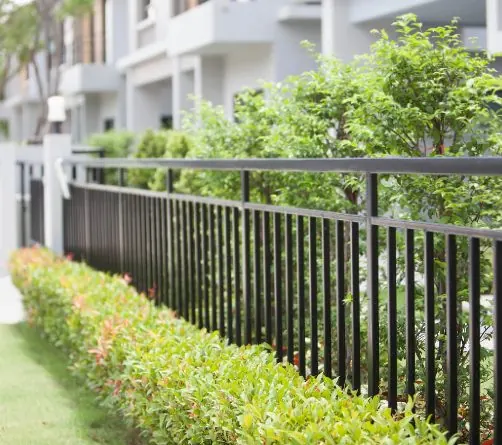
The perimeter is the most visible fence on the property, so it should look intentional and last. The common choices are ornamental aluminum or steel, which keeps the view open and looks upscale, wood privacy fencing, which screens neighbors and traffic, and chain link where cost and speed come first. A vendor article on apartment fencing recommends privacy fencing around the property edge for security, noise reduction and appearance, and aluminum around pool areas (American Fence Company, a seller of fencing products, so read it as a vendor view). Our own pages go deeper on each: ornamental iron, aluminum vs steel, wood privacy fences, commercial chain link and security fencing. Installed ranges for typical jobs, as of September 2026: wood $24-35 to $30-44 per foot, aluminum $35-60, steel $35-60, chain link $15-45. A multifamily job changes the number with footage, height, gates and access, so we quote the actual property.
Pool enclosures
A pool is where a fence stops being a design choice and becomes a compliance item. Texas sets minimum barrier rules for pools, and the numbers depend on the pool class and who regulates it. As an example of the detail involved, the state rule for public pool yards (25 Texas Administrative Code section 265.192) calls for an enclosure at least 6 feet tall on larger Class A and B pools and at least 48 inches tall on Class C pools, bars any opening that a 4-inch sphere can pass through, prohibits a horizontal mid-rail that makes the barrier easy to climb, and keeps planters, furniture and other climbable items at least 36 inches back. Gates open outward, lock, and, on Class C pools, self-close and self-latch. The same rule says that for pools at apartment complexes, Health and Safety Code chapter 757 applies. Because the exact standard depends on the pool and the authority, confirm it with your pool operator, your local health authority or your engineer before you specify the fence. We build to the specification you give us and can quote aluminum or steel enclosures with the gate hardware your authority requires. See pool fences.
Entry gates and access control
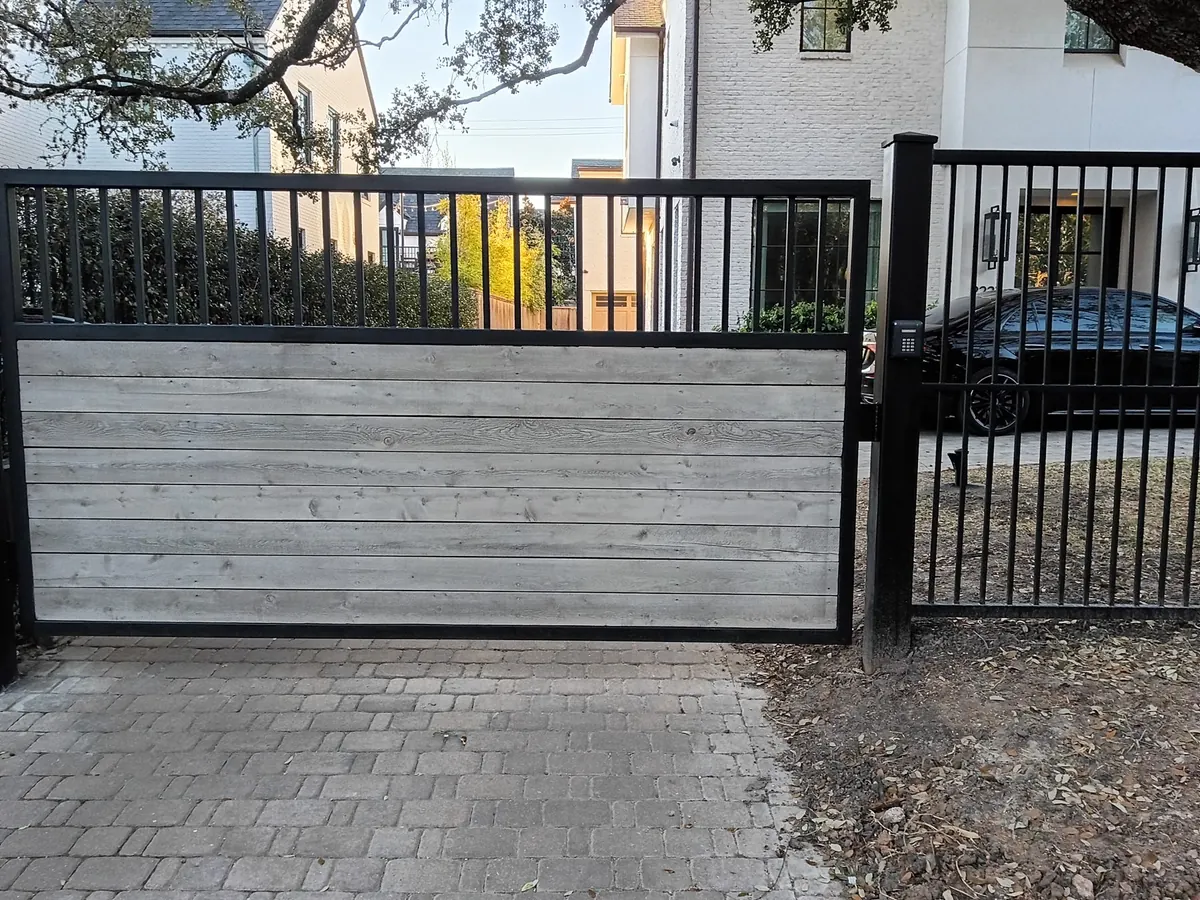
A gate is only as good as its posts, hinges, operator and the way it is used. Apartment gates see constant traffic, which is why a heavy-duty steel frame, properly sized posts and a correctly rated operator matter more here than on a home. We install automatic swing and slide gates with keypads and remotes. See automatic driveway gate installation and driveway gates. If your property uses card readers, call boxes, fobs or a gate-control vendor, bring that vendor in early so the operator, wiring and mounting are planned together. Also ask your fire department or fire marshal what emergency access they require at gates before you finalize the design, since requirements vary by jurisdiction. Gates should be planned for deliveries, trash trucks, move-ins and move-outs. The vendor article above also recommends pairing entry gates with key cards, fobs or intercoms so that only residents and approved visitors enter.
Phased replacement and working around residents
Most multifamily fence work happens on an occupied property. Tell us when residents are home, where they park, which gates they use, and whether pets or children are in the work area. We plan a sequence that leaves each building with a working perimeter at the end of the day, schedule noisy work for hours that suit the manager, and can break a large replacement into phases to fit a budget, a reserve schedule or a season. A phased plan also lets a board see one finished section before it approves the rest. Most fence projects take one to two days once scheduled, and pool fences one to three days. Large jobs run longer, and we will give you the schedule in writing.
Approvals and paperwork
- The city or county rules for your address. A development plan or site plan may have set fence materials and heights. See permits by jurisdiction.
- Your HOA, condominium association or owner. Many communities have architectural review for any fence change.
- Utility, drainage and access easements. See property lines and easements.
- Your lender, insurer or ownership group, if they need to approve capital work. We provide a written scope and photos for your file, and we are insured.
- Fire department access, for gates across drives or fire lanes.
- Your pool operator or health authority, for any enclosure.
How to get a price
- 1Send the property and the problem
Name, address, the fence or gate involved, rough footage and photos.
- 2Walk the site with us
We check the fence lines, gates, grade, access, utilities and what the residents do each day.
- 3Get an itemized estimate
Footage, height, material, posts, gates, hardware, removal of old fence and phasing, in writing.
- 4Approvals
Board, owner, city or health authority sign-off comes before the build.
- 5Build in phases and walk it
We keep the property secure each day, clean up and walk the finished work with the manager.
Sources and where to verify
Rules change, and this page is general information, not legal or engineering advice. Confirm pool and fire access requirements with the authority that regulates your property.
Frequently asked questions
Do you fence apartment communities?
Can you replace a fence in phases?
Can you work on an occupied property?
What do you need to give me a price?
Do you build pool enclosures to code?
Do you install automatic gates for apartments?
Do you provide insurance paperwork?
Last reviewed September 2026. Local rules and prices change; confirm details with 76 Fence, your HOA and your city or county.