
The most common gate complaint is also the cheapest to prevent: the opening is a few inches too narrow for the mower, the wheelbarrow or the trailer. Size a gate for the widest, most awkward thing that will ever pass through, not for a person walking. This guide gives typical widths, how to measure, and what changes the answer in a Katy yard.
Typical gate widths
| Gate | Typical width | Fits |
|---|---|---|
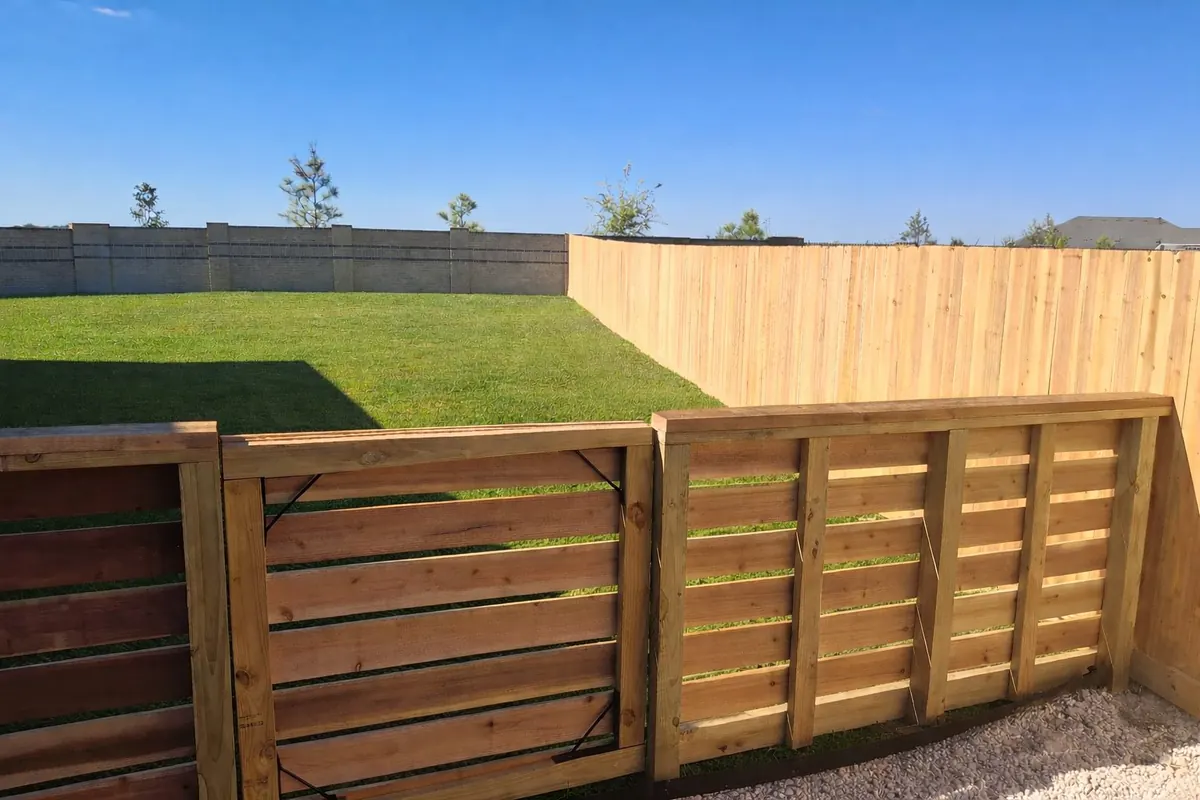
| Walk gate | 3 to 4 feet. Three feet is the smallest common size and 4 feet is the most popular | People, a push mower (3 ft works, 4 ft is comfortable), garbage bins |
| Wide walk gate | 4 to 6 feet | A compact riding mower (plan for 4 to 6 feet), a wheelbarrow, a garden cart |
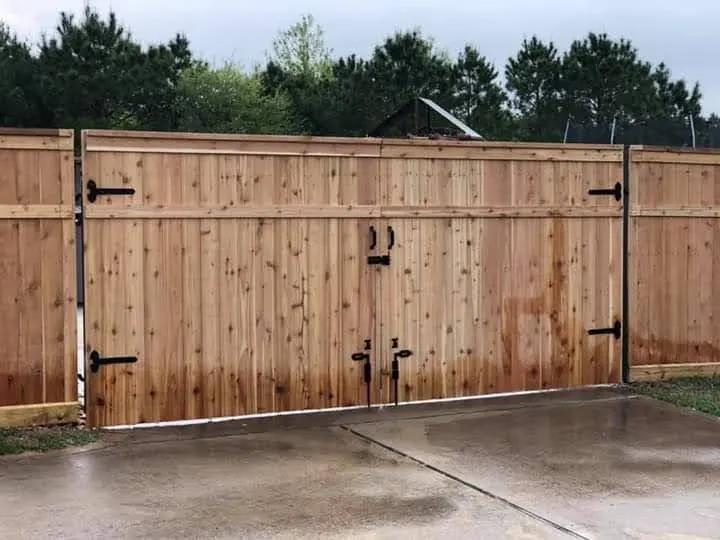
| Double gate | Two panels that meet in the middle; a 6 foot opening is often two 3 foot leaves | Wider yard access, a pool crew, a landscaping crew |
| Driveway gate | About 10 feet for trucks and SUVs, 12 feet for farm equipment and trailers; some reach 18 feet | Cars, trucks, trailers, an RV. Wider gates cost more |
Typical widths are from a consumer sizing guide (Angi, listed below). Your HOA, lot and equipment decide the right size for you.
How to measure
- 1Measure the widest thing
Measure your mower deck, wheelbarrow, trailer or truck at its widest point, including mirrors and handles.
- 2Add clearance
Add room for hands, wobble and turning. A gate that fits on paper is a gate you scrape.
- 3Measure the opening at several points
Ground slope, posts and trees can change the clear opening along the gate path.
- 4Decide the swing
A swinging gate needs clear space for the leaf to open. A sliding gate needs a straight run beside the opening.
- 5Pick the post size
Wide gates need heavier posts. One guide gives 4x4 posts for gates 3 to 6 feet wide, 6x6 for 10 feet and 8x8 for 12 feet. We set posts for the load. See below.
Swing or slide?
Swinging gates take less side-to-side space but need clearance in front or behind. Sliding gates work better for wide openings, inclines or tight side spaces. On a sloped drive, an outward-opening gate can avoid scraping the ground, and on a short drive it can keep the gate from hitting a parked car. If you are planning an opener, the keypad location also decides which way the gate should open. We cover both in driveway and automatic gates and automatic gate installation.
What goes wrong with the wrong width
- Too narrow for the mower. The most common mistake. A riding mower needs more than a 3 foot walk gate.
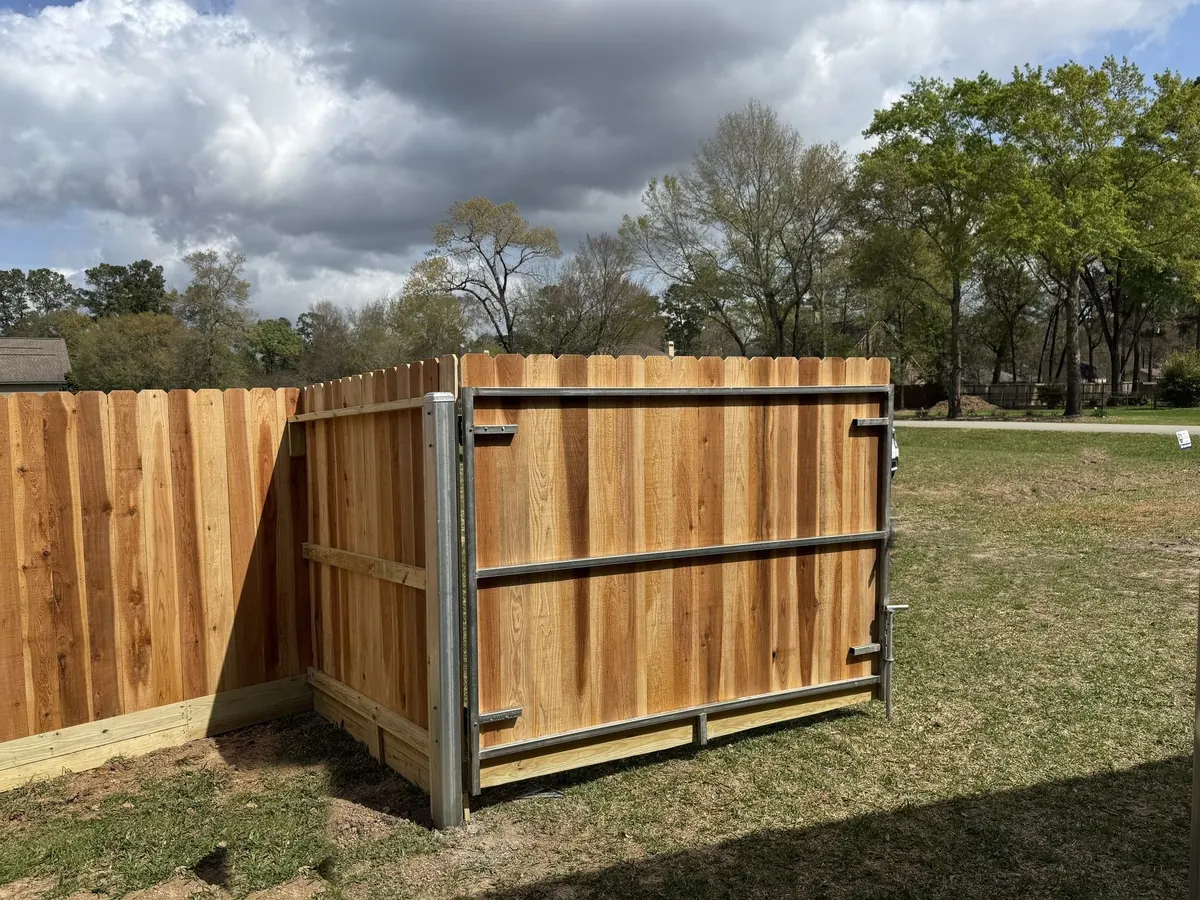
- Too wide for a wood leaf. A wide single wood leaf sags. It needs a steel frame or a double gate. See gate repair for why gates sag.
- No room for the crew. Pool builders, landscapers and movers need a bigger opening than your family does.
- Posts too light. A wide gate pulls on the post every time it swings. Posts for gates should be heavier and set deeper than line posts. See clay soil and post depth.
- Gate at the wrong place. A gate on a downhill slope or across a drain swale causes trouble. Check easements first: property lines and easements.
Cost
As of September 2026, a standard walk gate runs about $350-600 installed, and a double or drive gate runs $500-5,000 depending on width, material and frame. Automation starts at about Starting at $2,000 installed installed. The wide range for drive gates is real: a plain wood double gate and a custom steel-frame sliding gate are different jobs. See what a fence costs in Katy.
Sources and where to verify
Frequently asked questions
What is the standard width of a fence gate?
How wide a gate do I need for a riding mower?
Should I choose a swing gate or a sliding gate?
Why does my wide gate sag?
How much does a gate cost?
Last reviewed September 2026. Local rules and prices change; confirm details with 76 Fence, your HOA and your city or county.