
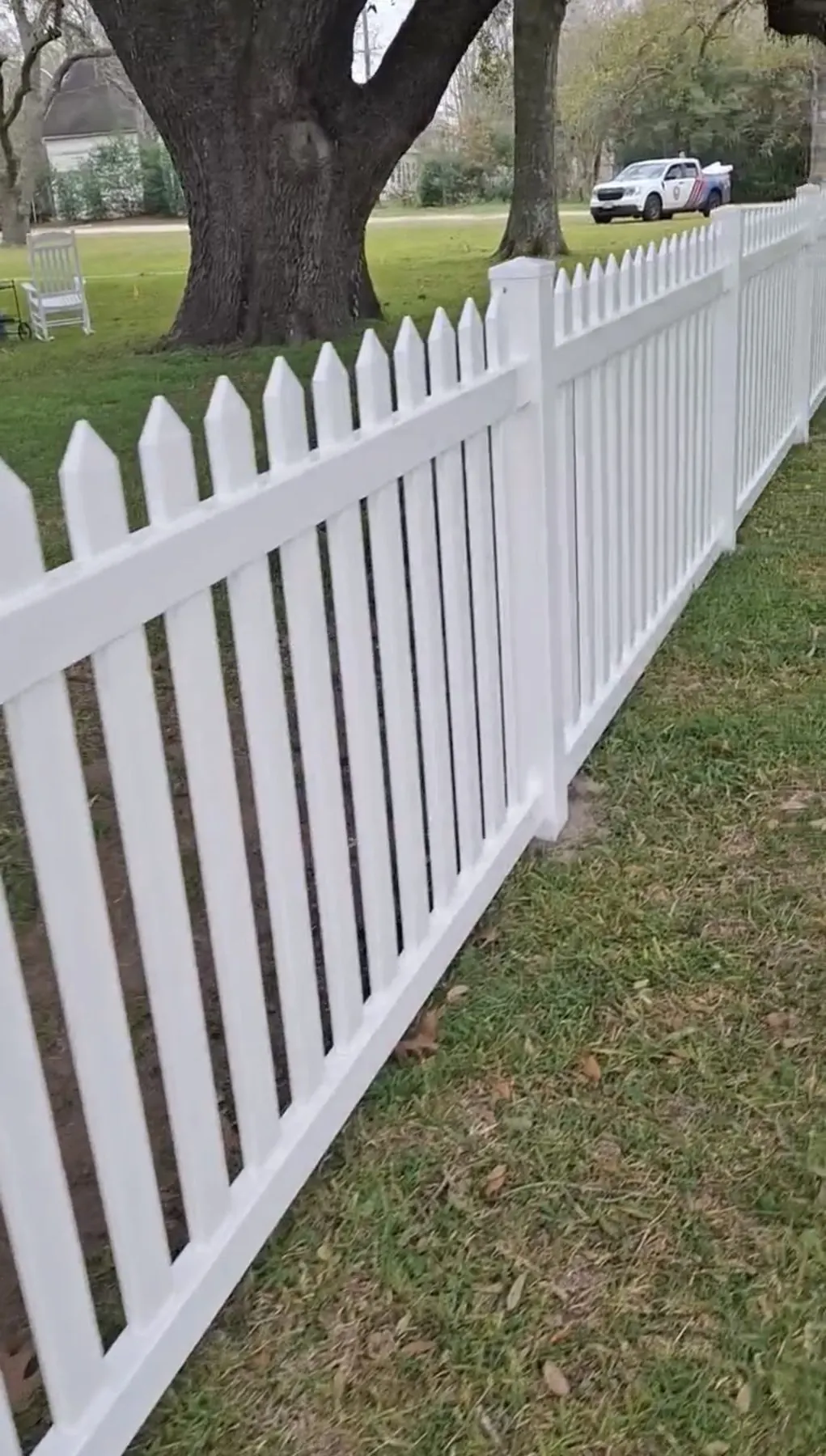
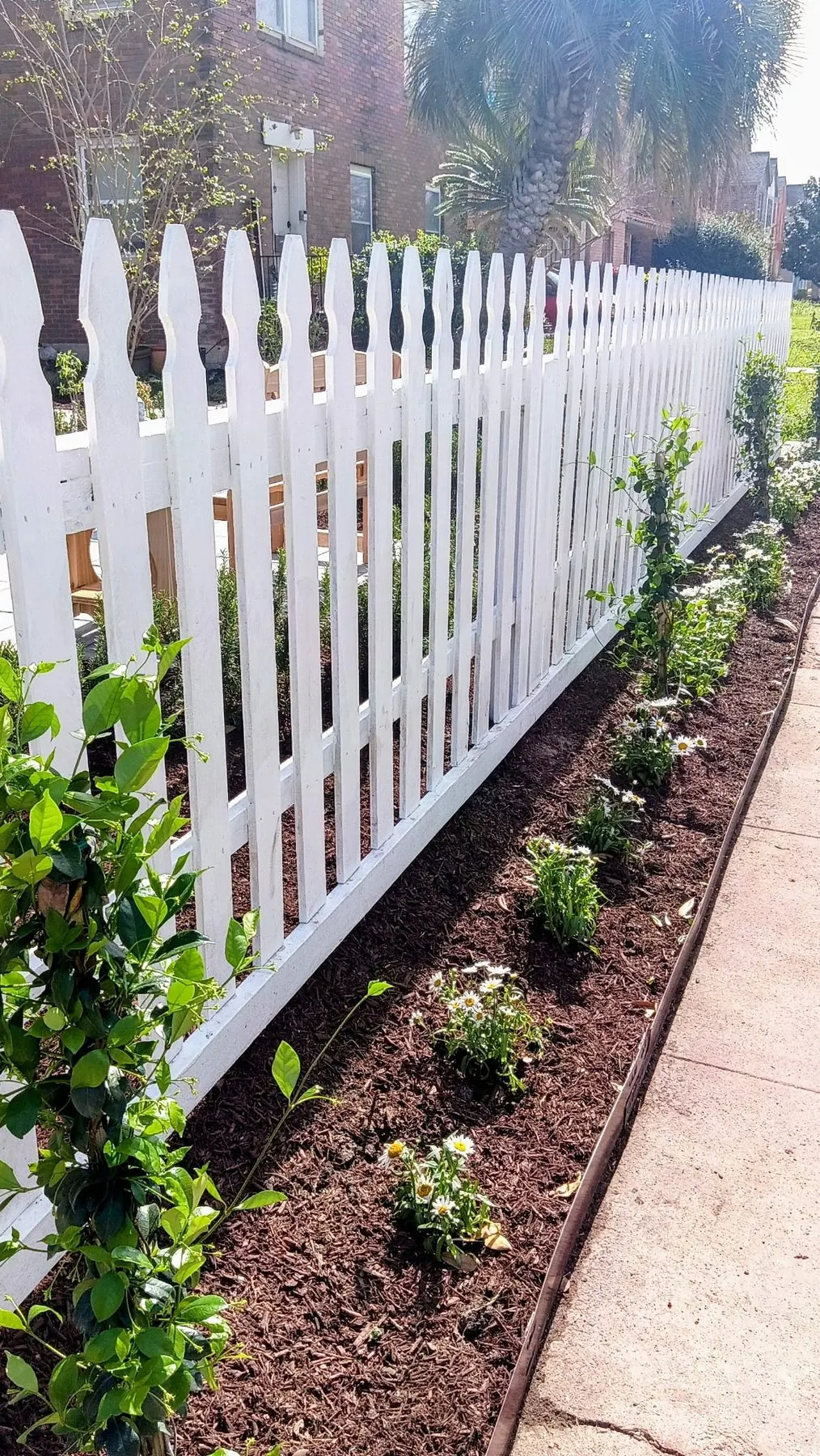
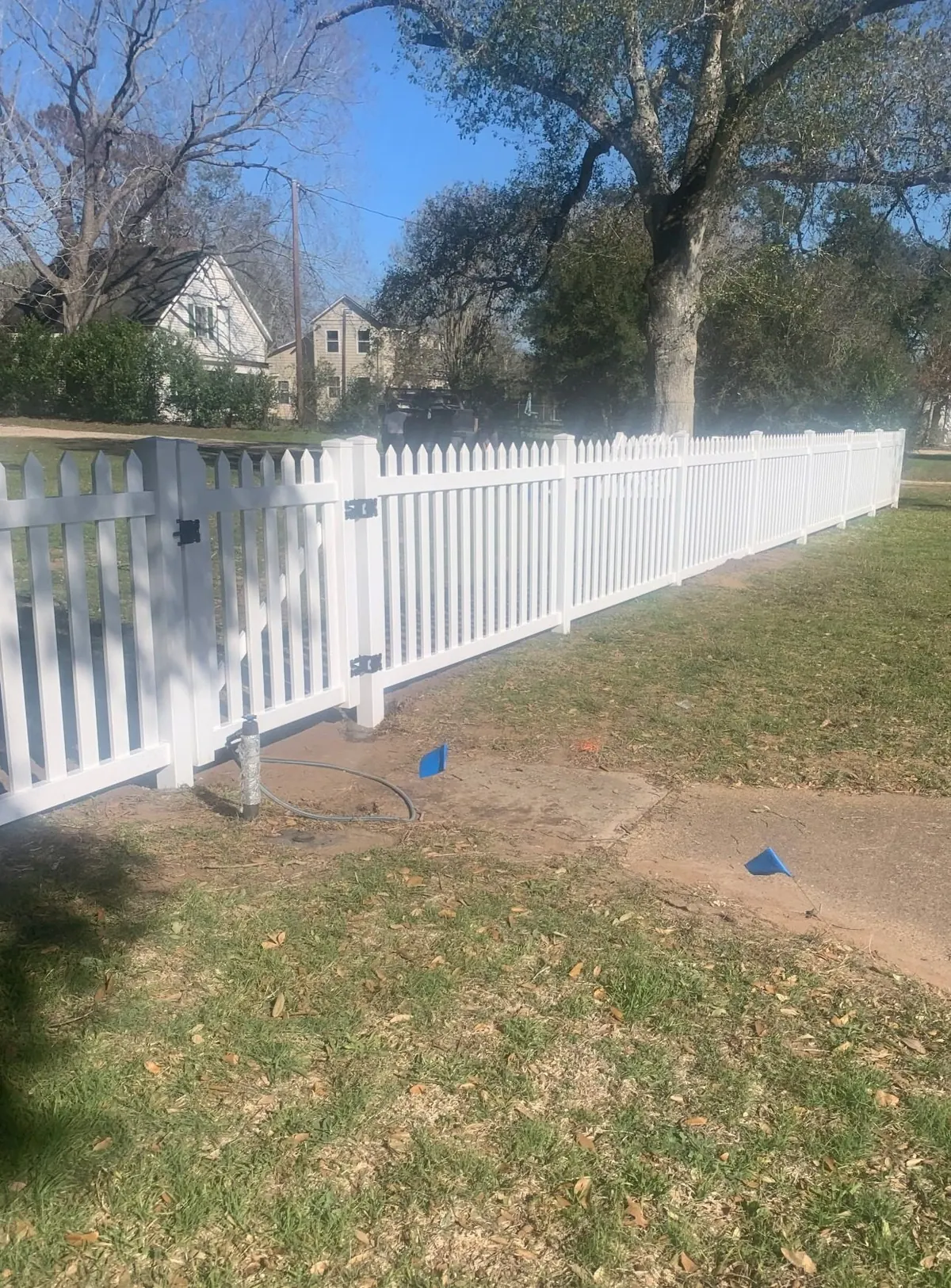
Ask five Katy homeowners for a picket fence and you may get five different pictures. Around Houston, a picket fence is usually the six-foot wood privacy fence with the boards set side by side and a rounded or pointed top, the one that goes around most backyards. Elsewhere it means the short decorative white fence in front of a cottage. Both are real, both are built here, and the rules, the price and the upkeep are not the same. This page sorts out the difference so you can ask for the right thing.
The two kinds of picket fence
| Privacy picket (the common Texas fence) | Decorative picket | |
|---|---|---|
| Typical height | 6 feet in back yards, where your HOA and city allow it | About 3 to 4 feet, mostly front yards and garden borders |
| Boards | Wide boards set tight, one layer, with a flat, dog-ear or rounded top | Narrower pickets spaced apart, often with pointed or scalloped tops |
| Purpose | Privacy, containing dogs and children, screening a pool equipment area | Marking a boundary, framing a garden, a welcoming front entry |
| Material | Cedar or pressure-treated pine; see cedar vs pine | Cedar, pine, vinyl or composite (vinyl and composite stay painted without repainting) |
| Where the rules bite | Back-yard height, gate placement and stain color | Front-yard height limits, which are often much lower than back-yard limits |
Heights and HOA limits
Front yards are where picket fences run into rules. Recorded deed restrictions in Katy neighborhoods often cap fences between the street and the front of the house at a much lower height than the back yard allows. For example, the recorded declarations we read for Oak Park Trails limit fences in front of the front building line to 3 feet and allow 6 feet on the sides and rear. Your neighborhood may differ, so check before you pick a height. Start with the HOA approval guide and the HOA fence rules by neighborhood directory, and see permits by jurisdiction for city and county rules.
Top styles and what they do
Flat top: a clean, modern edge that is easy to cap and stain. Dog-ear: the top corners are clipped, which sheds water and is the most common look on Katy back yards. Rounded or scalloped: a softer look for front yards and decorative fences. Gothic or pointed: the classic white-picket profile. For a taller fence that needs more protection from the weather, a top cap and side trim finish the end grain and help the wood last. Those are covered under wood and cedar privacy fences.
What decides how long a picket fence lasts
The boards are rarely what fails. Posts rot at the soil line, fasteners rust and clay moves the posts. Katy's soil swells when wet and shrinks when dry, which loosens posts over the years. We explain this on how long a fence lasts and Katy's clay soil. For a picket fence the details that matter are post depth and spacing, whether the posts are set in concrete, the fasteners and whether the wood is stained or sealed. We set posts 2 feet deep and set them in concrete for a standard 6 ft wood fence.
Picket fences and pools
A picket fence can serve as a pool barrier, but pool barriers have their own requirements. Model building codes commonly call for a barrier at least 48 inches tall, small gaps between pickets, no easy footholds and a self-closing, self-latching gate that opens away from the pool. Your city or county may adopt different rules. See pool fences before you design a decorative picket around a pool.
Cost
As of September 2026, our installed ranges for a six-foot wood privacy fence are about $24-35 per linear foot for pressure-treated pine and $30-44 for cedar. Those figures are for the tall privacy fence. A shorter decorative picket uses less lumber but more labor per foot, and vinyl or composite pickets price differently, so we quote them from your measurements. A walk gate runs $350-600. Full detail is on what a fence costs in Katy.
Picket fences for dogs
A solid privacy picket keeps most dogs in, but diggers, jumpers and gate-escape artists need extra planning, from a bottom rail to a taller section. Read our dog and pet fence page.
How an estimate works
- 1Tell us about the job
Call, text or book online. Include your street or community.
- 2We look at the site
We check the fence line, grade, gates, access and any HOA or city needs.
- 3You get an itemized estimate
Material, height, gates and scope in writing.
- 4Approval and scheduling
If your HOA or city needs to approve the fence, that comes first. Most fence projects take one to two days once scheduled, and pool fences one to three days.
- 5Build and final walk-through
We install, clean up and walk it with you.
What to ask on the estimate
- Height of each section, front and back, and whether the HOA allows it
- Board width, top style and whether there is a cap or trim
- Post material, size, depth and spacing, and whether posts are in concrete
- Fasteners: stainless or coated, or plain
- Gate frame, hinges and latch
- Which side faces the street or the neighbor
- Stain or seal, and the color if your HOA names one
- Removal of the old fence and haul-off
Compare this with the parent site's materials and styles pages at 76fence.com/katy, and see what a fence costs in Katy.
Sources and where to verify
Frequently asked questions
What is the difference between a picket fence and a privacy fence?
How tall can a picket fence be in Katy?
Is a picket fence a good choice for a pool?
Should I choose cedar or pine pickets?
Can you match a neighbor's picket fence?
How long does installation take?
Last reviewed September 2026. Local rules and prices change; confirm details with 76 Fence, your HOA and your city or county.