
A fence that works for people does not always work for dogs. A gap that a person would never notice is an open door for a beagle, and a gate that is easy for you to open is easy for a clever retriever to push. This page is for Katy homeowners who want to keep a dog in, or a neighbor's dog out. It covers new fences and fixes to the one you have.
The three ways dogs get out
| How they escape | What helps | What to ask on the estimate |
|---|---|---|
| Under the fence | A board or rail along the bottom that closes the gap, and posts set so the ground cannot wash out beside them. Katy's clay soil shrinks and swells, which opens gaps over time. | Ask about a bottom board and about extra protection along the base for a determined digger. See clay soil and fence posts. |
| Over the fence | Height. Six feet is the usual privacy height and the most many HOAs allow. | Check your HOA rule for height before you plan on going taller. See the HOA fence rules directory. |
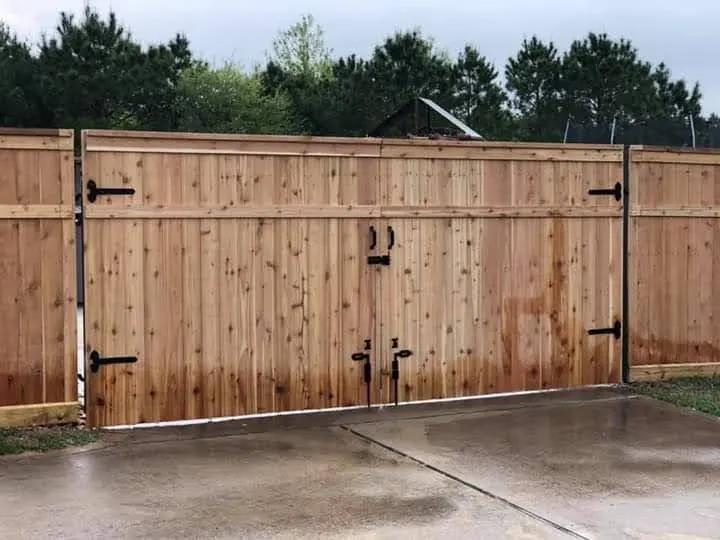
| Through the gate | Self-closing hinges and a latch the dog cannot lift or push. Gates are the most common failure point. | Ask about hinges, latch type and a gate stop. See gate repair if yours sags or does not latch. |
Choosing a fence style for a dog
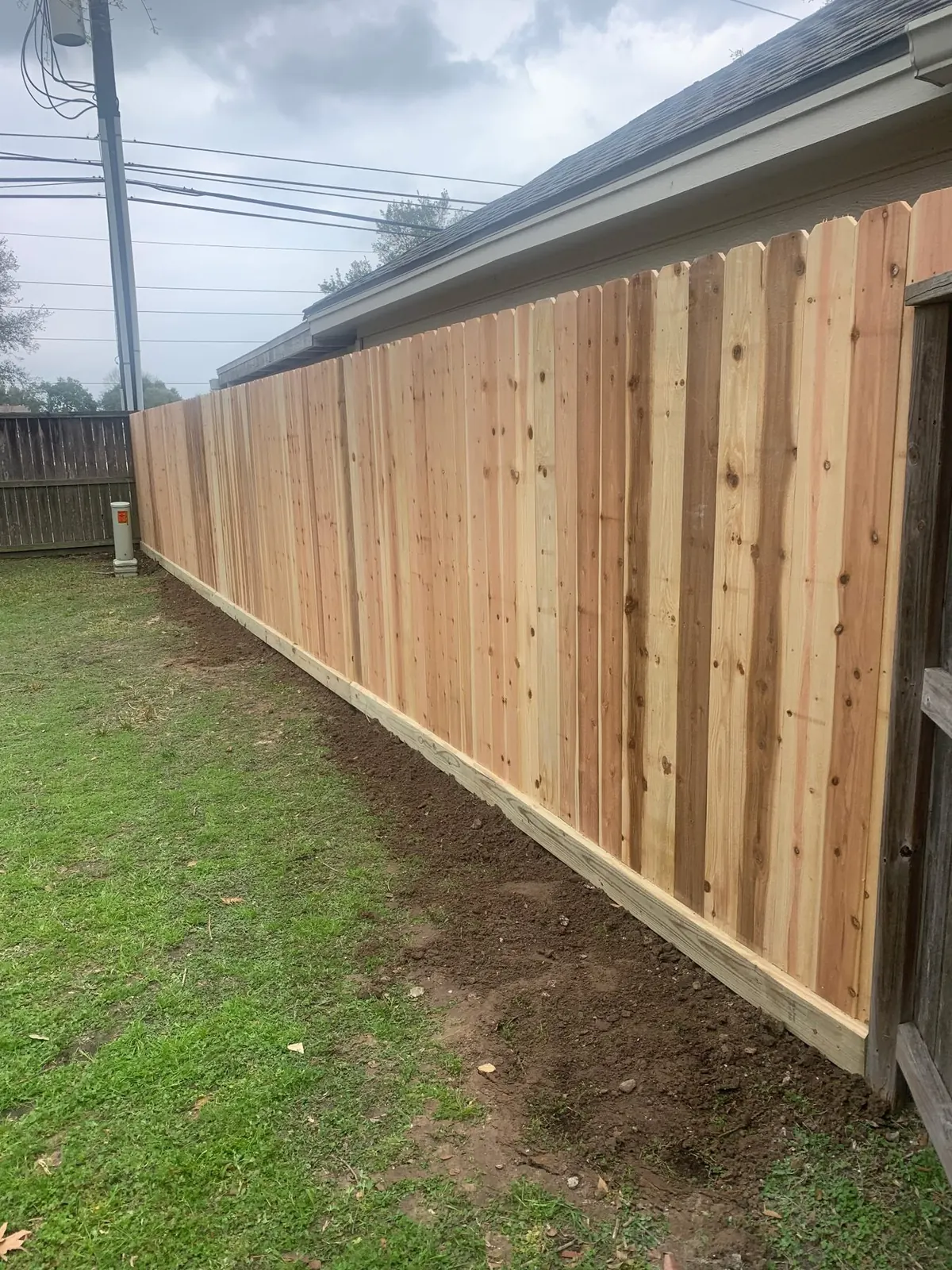
- Privacy wood or board-on-board. Solid boards close the gaps and keep the dog from watching everything that passes. See wood privacy fences.
- Iron or aluminum. Good for dogs that are not bothered by what they can see. Check the picket spacing, since small dogs can fit through standard gaps. See iron and aluminum fences.
- Chain link. An economical option in some locations. Many HOAs restrict it, so check first. See chain link fences.
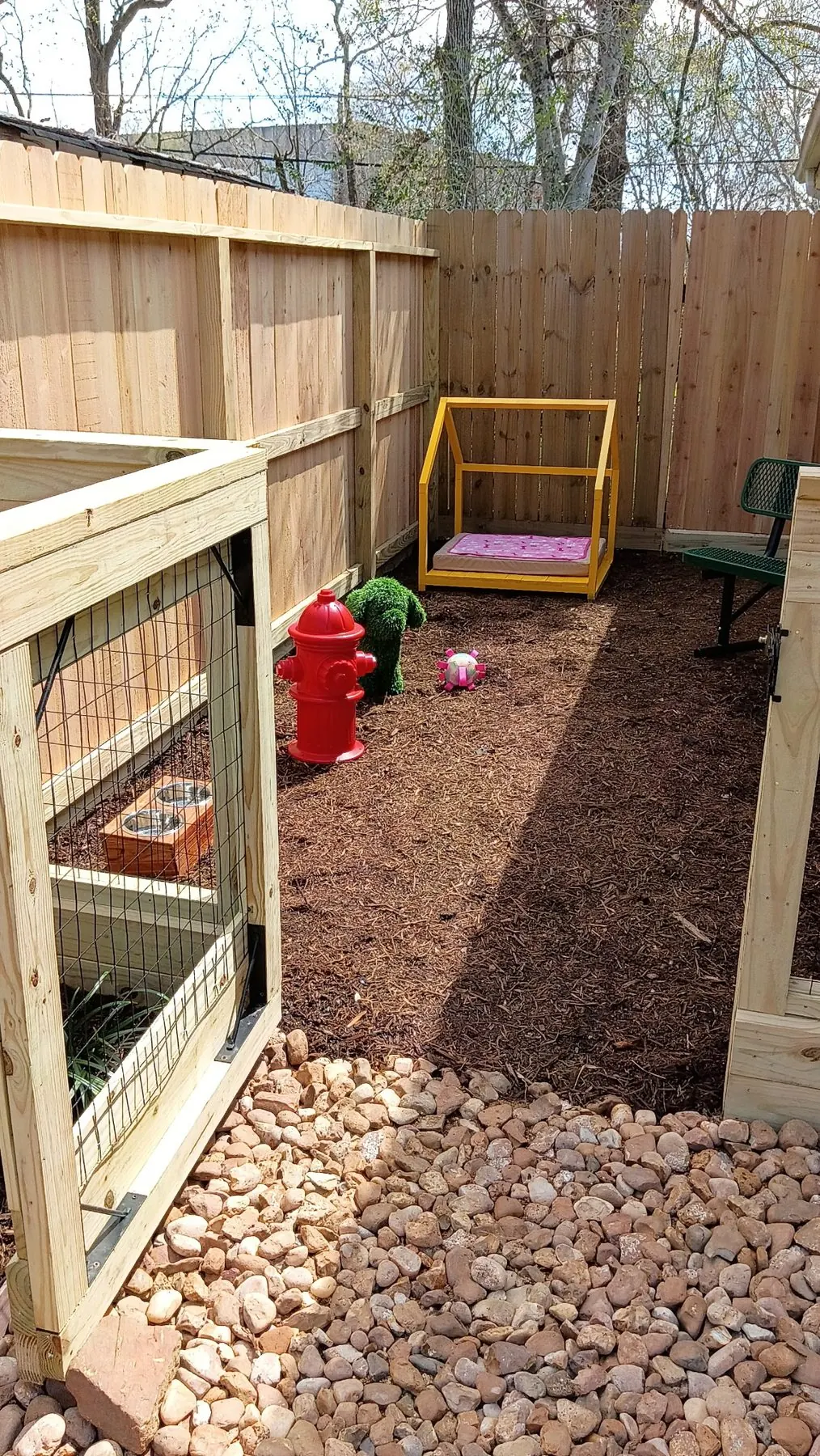
- A dog run inside the yard. A smaller fenced section that keeps part of the lawn dog-free, as in the photo below.
If you have a pool
A dog fence and a pool fence are not the same thing. Pools have their own rules and safety needs, so read our pool fence page before you plan a dog fence around one.
Fixing the fence you already have
Many dog escapes come from a small problem: a gap under a board, a loose picket, a leaning post or a gate that no longer latches. Those are often repairs, not a new fence. See fence repair and fence post repair. Send photos and we will tell you what it involves.
Before you build
- Find your HOA's rule on height, style and materials
- Locate your survey and note easements. See property lines and easements
- Walk the fence line and mark the spots your dog already tests
- Think about where gates go so the dog is not at the gate when you open it
- Ask about stain or sealer if you want the wood to last. See fence staining
Frequently asked questions
How tall should a fence be for a dog?
How do I stop my dog from digging under the fence?
Can you fix a gap in my fence instead of replacing it?
What type of fence is best for a dog that barks at passersby?
Does my HOA allow a dog fence?
Last reviewed September 2026. Local rules and prices change; confirm details with 76 Fence, your HOA and your city or county.