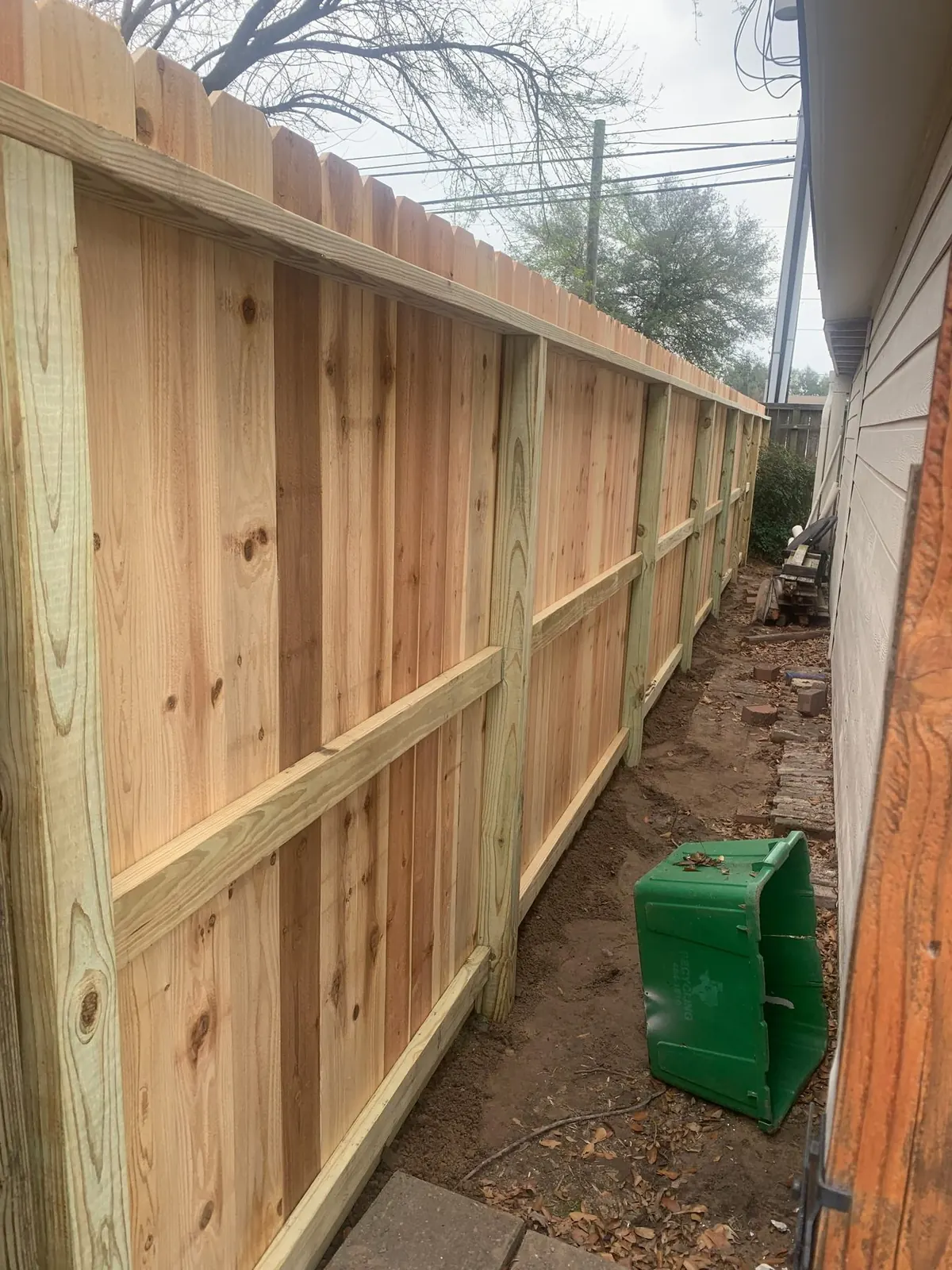
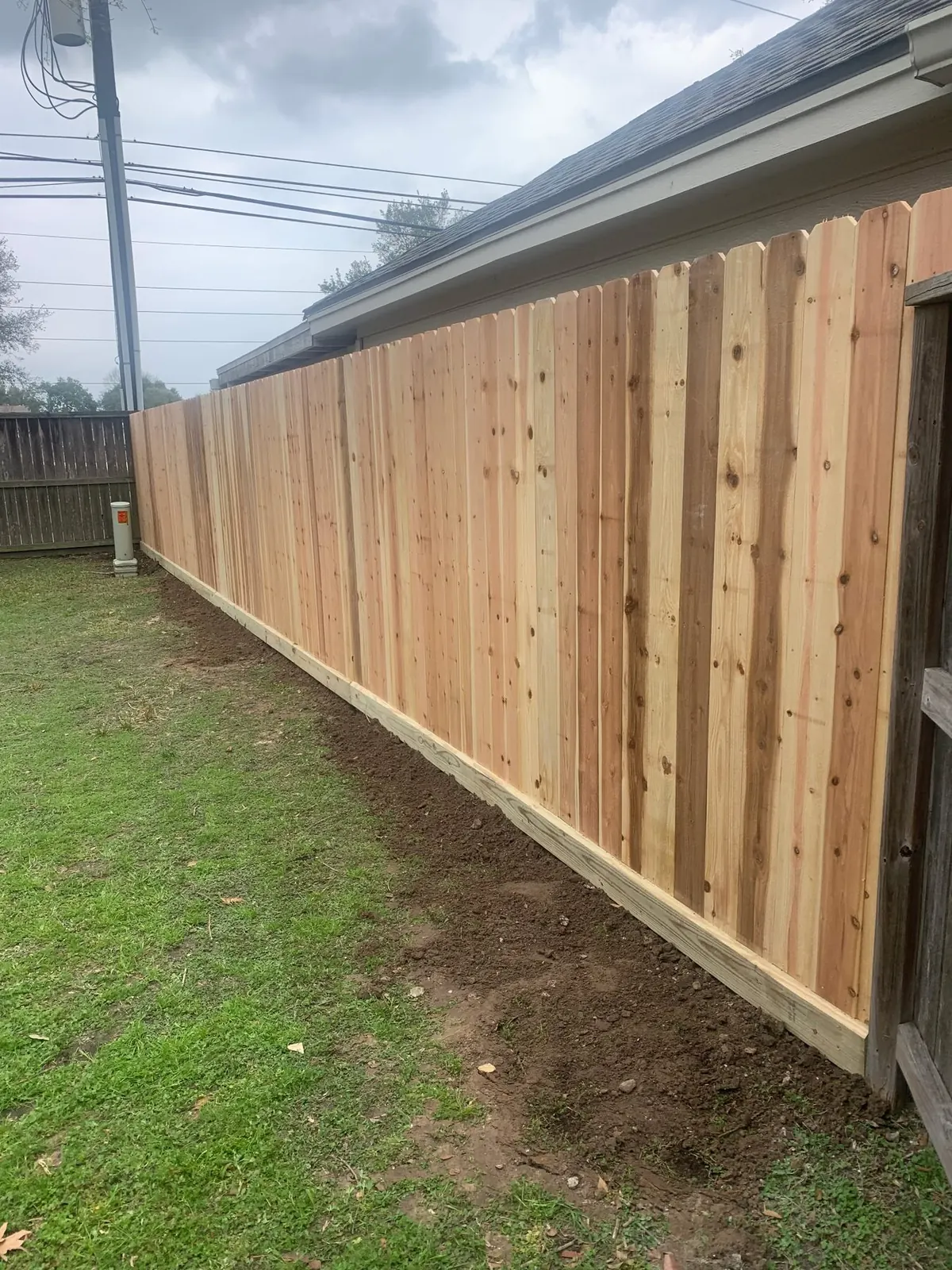
Both pine and cedar make good fences in Katy when they are built correctly. They differ in how they resist rot and insects, how they weather, and what they cost. The right one depends on your HOA, your budget and your timeline.
| Pressure-treated pine | Cedar | |
|---|---|---|
| Decay and insects | Chemically treated to resist rot and insects | Naturally resistant to rot and insects |
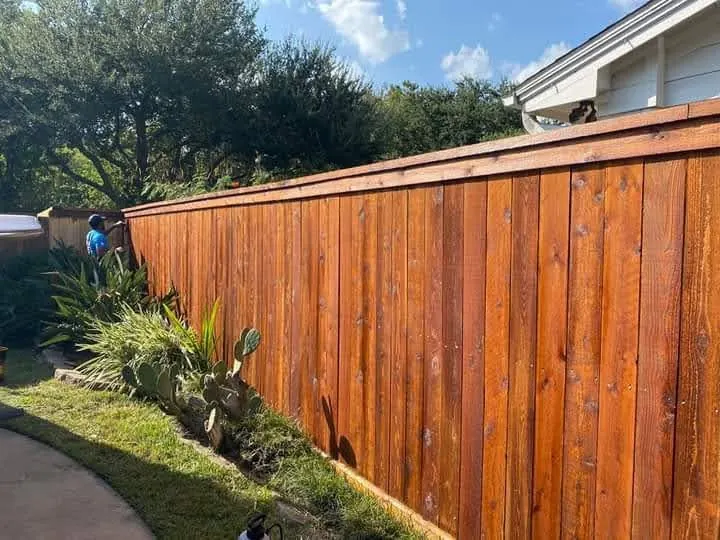
| Weathering | Can twist, split or check as it dries | Tends to stay more stable; still weathers gray without finish |
| Finish | Takes stain; treated wood usually needs time to dry before finishing | Takes stain and holds color well |
| Cost | Lower material cost | [Cost difference pending] |
| HOA | Allowed in many communities | Required by some communities |
What matters more than the species
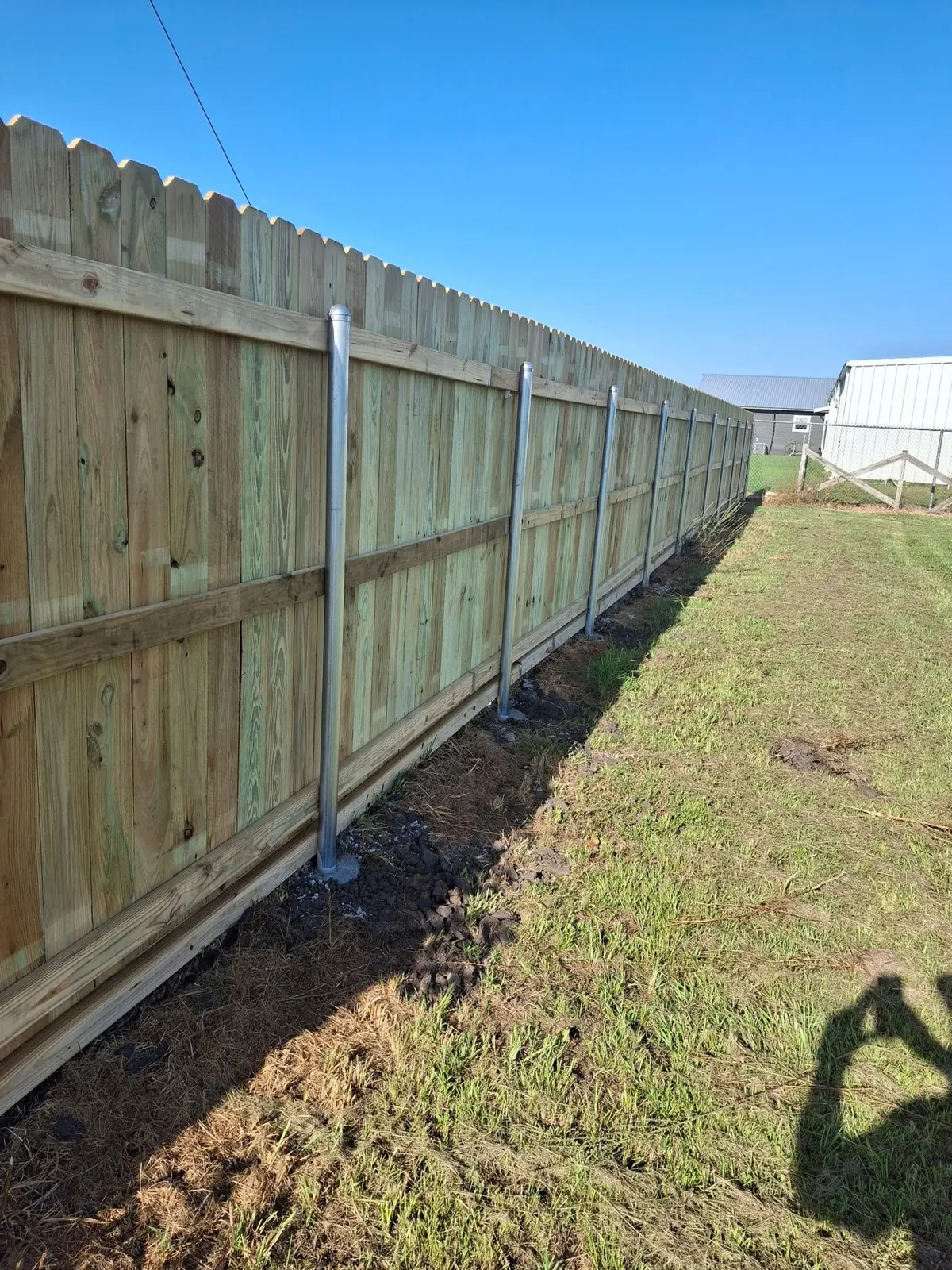
In clay soil, posts fail before boards do. Cedar boards on shallow wood posts will still lean. The species you choose matters less than how the fence is built: post material, depth, concrete, fasteners and bracing. Read clay soil and fence posts.
Finish also matters. Katy's sun, humidity and heavy rain wear on any wood. See fence staining.
Frequently asked questions
Is cedar worth the extra cost?
It depends on how long you plan to stay, whether your HOA requires it, and how much upkeep you want. Cedar naturally resists rot and insects better than untreated pine; pressure-treated pine is treated to resist them.
Do I have to stain a cedar fence?
No, but unfinished wood weathers to gray and can crack. Many Katy HOAs specify stain colors. See the staining guide.
Which does 76 Fence recommend?
We recommend what fits the job: your HOA rules, your budget and how long you will own the home. We will price both if you ask.
Last reviewed September 2026. Local rules and prices change; confirm details with 76 Fence, your HOA and your city or county.