A dumpster enclosure is a fence that gets hit. Trucks back into it, bins bang against it and gates swing open and shut every week. That is why a good enclosure is built differently from a yard fence. This page is for property managers, HOA boards, business owners and builders who need to screen a dumpster or trash area in Katy, Fulshear, Cypress, Richmond and the surrounding area.
What an enclosure needs to do
- Screen the bin from the street, parking lot or neighbors. Many cities, HOAs and landlords require screening of trash areas.
- Let the hauler in and out. Front-load trucks need straight access and room to lift. Confirm the bin size and truck path with your hauler before you draw the enclosure.
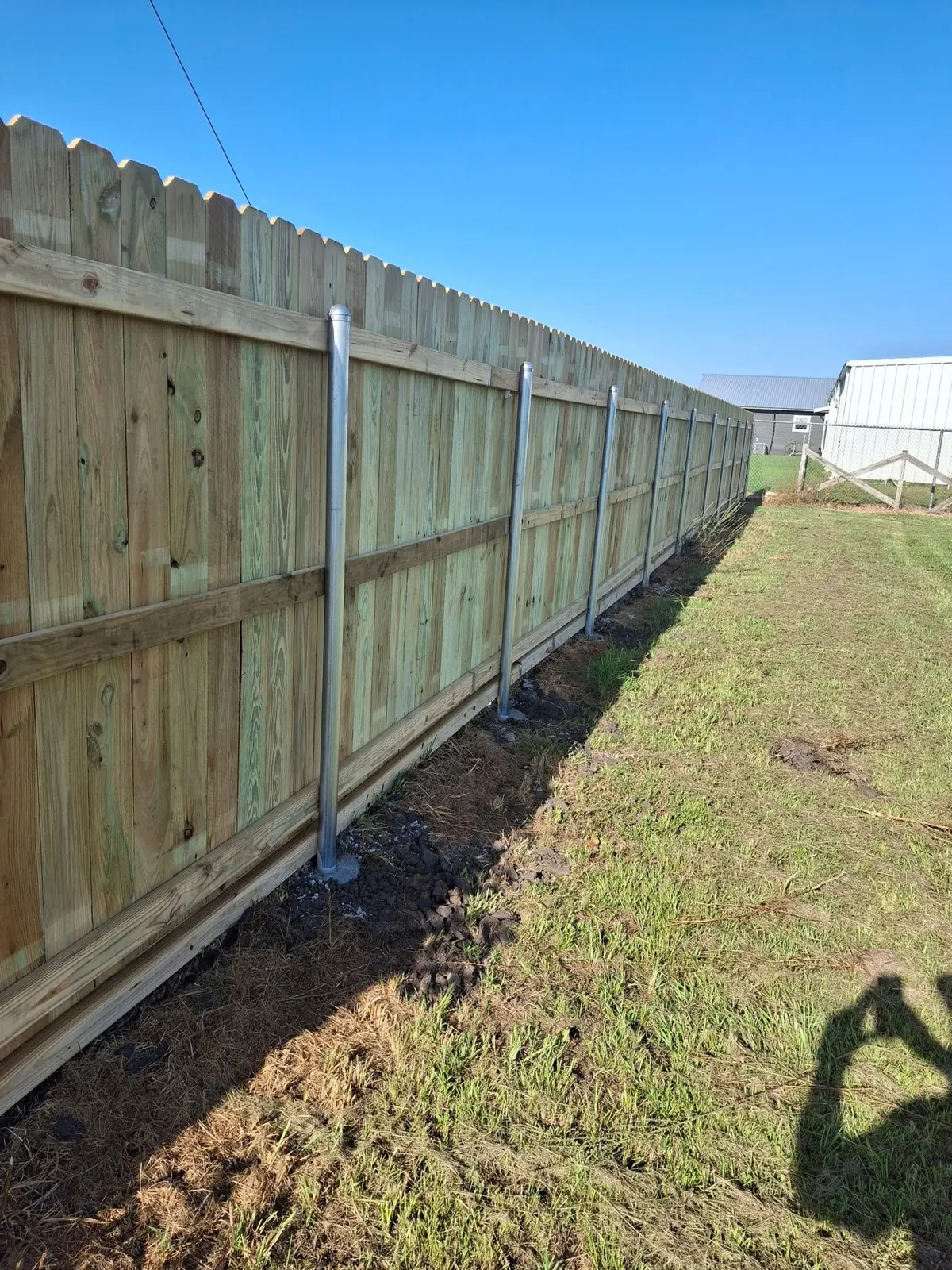
- Hold up to impact. Steel posts, a rail or curb to keep the bin off the wall, and bollards at corners are common ways to protect the structure.
- Open and close easily. Heavy double gates need strong hinges and posts, and a cane bolt or gate stop so they stay open while the truck works.
- Stay clean. A concrete pad, a drain or slope where the site allows it, and materials that wash down.
Sizing: what to measure
Enclosure size depends on the bin. A small commercial dumpster is much smaller than a large front-load bin, and a site with two bins, or a bin plus a recycling bin, needs a wider enclosure. Measure the bin, then add clearance on each side so the bin can be rolled in and out and the gates can swing. Tell us the bin dimensions from your hauler and we will lay out the enclosure. We do not give a standard size here because haulers and bin types vary.
Materials we can quote
| Material | Where it fits | What to know |
|---|---|---|
| Cedar or pine on steel posts | Retail, HOA common areas and residential communities that want a wood look | Looks good and can be stained to match. Needs upkeep. Steel posts and bracing hold up better to impact than wood posts. |
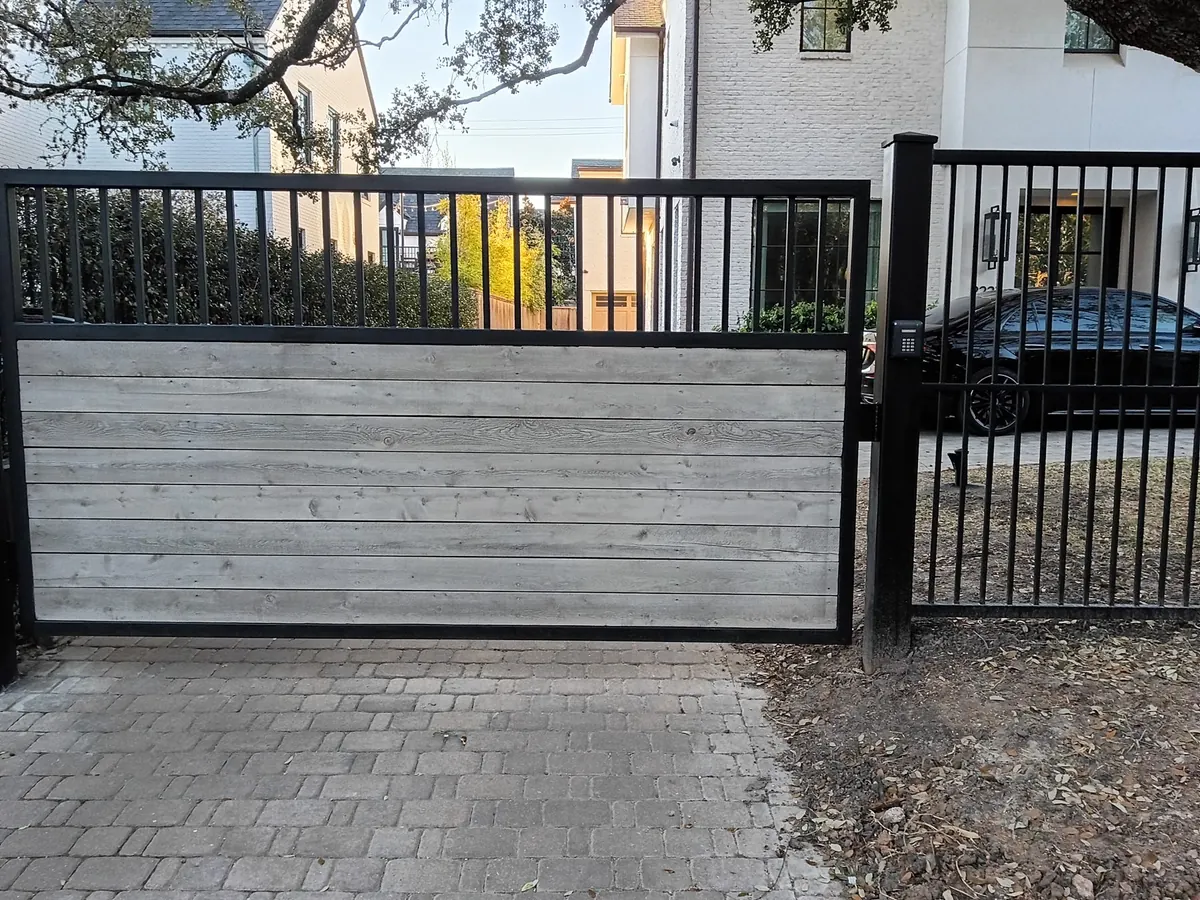
| Ornamental iron or aluminum with privacy infill | Sites that want a clean, modern look | Strong and long-lived. Ask about the infill type, since open pickets do not screen. |
| Metal panel | Industrial, restaurant and apartment sites | Durable and low upkeep. Check the look against the building. |
| Masonry or block (referred out) | Sites that need a matching brick or stucco wall | Ask us about the fence and gate portion. Masonry is usually a separate trade. |
Approvals to check before you build
- The city or county development rules for your address, which may set the screening height and materials. Ask the building or planning department.
- Your HOA or property owners' association if the site is in a deed-restricted community.
- Your landlord, property manager or lender, if the site is leased.
- Your waste hauler, so the gate width, swing and pad suit their truck.
How to get a price
- 1Send a photo and the bin size
A photo of the current trash area, the bin dimensions from your hauler and the address are enough to start.
- 2We look at the site
We check access, grade, the pad and where the gates need to swing.
- 3You get an itemized quote
Enclosure, gates, hardware and any protection, in writing.
- 4Approval and scheduling
If the city, HOA or landlord must approve it, that comes first.
- 5Build and walk-through
We build the enclosure and test the gates with you or the property manager.
Sources and where to verify
Frequently asked questions
Do you build commercial dumpster enclosures?
Does a dumpster enclosure need a permit in Katy?
What size should a dumpster enclosure be?
What is the best material for a dumpster enclosure?
Can you match the enclosure to the building or HOA fence?
Last reviewed September 2026. Local rules and prices change; confirm details with 76 Fence, your HOA and your city or county.