
Churches and schools ask a fence to do more jobs at once than almost any other customer. It has to contain small children on a playground, keep a street or a retention pond at a safe distance, mark where a parking lot ends, control who walks onto the campus during the week and still look open on Sunday morning. Boards, pastors, administrators and facilities committees also tend to make decisions together, on a calendar. This page is for church administrators, school business officers, child-care directors and the volunteers who handle building projects in Katy, Fulshear, Cypress, Richmond and the surrounding area. Our general commercial page is commercial and HOA fencing.
What churches and schools usually fence
| Area | What it needs to do | What to settle early |
|---|---|---|
| Playgrounds and child-care yards | Contain children, keep strangers out, give staff clear sightlines | Height, bar spacing, latches out of children's reach, licensing rules |
| Parking lots and drives | Keep traffic on the lot and protect property after hours | Gate width, operator, who holds the code or remote, snow-free and emergency access |
| Ball fields and courts | Contain balls, keep the field closed after hours | Chain link height, coating, gates for mowers and trucks |
| Perimeter | Mark the campus and reduce shortcuts | Material, height, sightlines, neighbors and easements |
| Dumpster and utility areas | Screen and secure | See dumpster enclosures |
| Cemetery, garden and retention areas | Mark boundaries or keep people away from water | Safety, look, maintenance |
| Entry points | Control where and when people come in | Pedestrian gates, keypads, auto-locking hardware |
Child-care and preschool programs
If your church or school runs a licensed child-care program, check the state licensing standard before you pick a fence. Under 26 Texas Administrative Code section 746.4305, a child-care center must generally enclose its outdoor activity space with a fence or wall at least four feet high. The rule lists exceptions, including after-school care in a classroom facility that a public school owns, operates and administers, alternate-care and get-well programs, and programs where the only children using the space are five or older. The version we read may not be current and does not address gates or latches, so ask your HHSC licensing representative which rule applies to your program and what the inspector will look for. We build to the specification you hand us. Fences for children also need smooth surfaces, no gaps that a child's head can pass through, and latches placed so small children cannot reach them. Our dog fence page and pool fence page explain the same kinds of details in another setting.
Safety and security: what a fence can and cannot do
A fence is one layer of security, not the whole plan. The Cybersecurity and Infrastructure Security Agency, in its perimeter security guide for houses of worship, describes layers: the inner perimeter is the building itself, the middle perimeter is the grounds around it, and the outer perimeter is the property border, parking and approaches. For the outer layers it points to clear sightlines, lighting, cameras and managing vehicle traffic, and it names a broken fence as an example of a weakness that someone could use to get in. We are fence builders, not security consultants, so we do not design a security program. What we can do is build the fence and gates so they are strong, in good repair and laid out the way your security plan calls for. A public school district shows the kind of project that exists: in 2024 a Texas district approved fencing around two campuses described as eight feet tall and designed to resist climbing, with a motorized gate opened by an RFID tag for buses, as reported by Community Impact. Your campus may need less or more. Talk with your administrators, your insurer and, where relevant, local law enforcement, then bring us the specification. See security fencing and ornamental iron for the options.
Materials that fit
| Material | Where it fits | What to know |
|---|---|---|
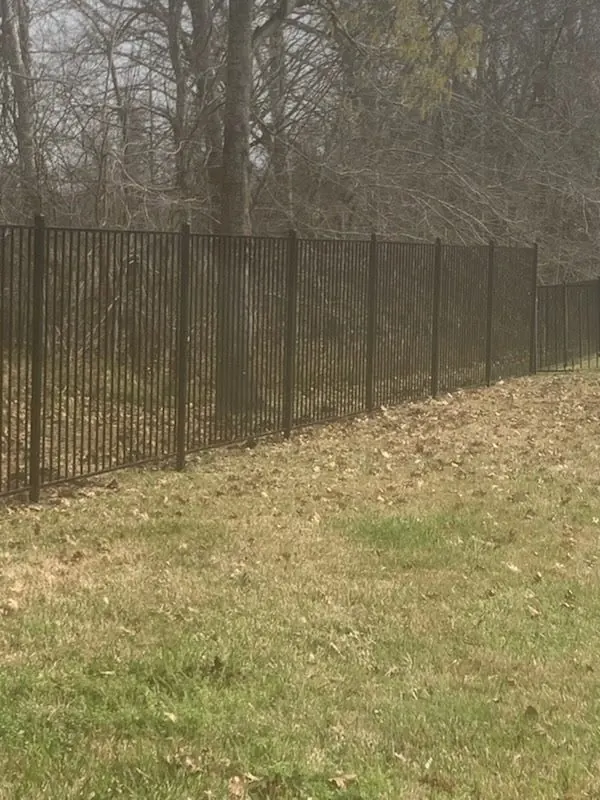
| Ornamental aluminum or steel | Front perimeters, playgrounds, entrances | Open view, a welcoming look and strong. Steel is stronger, aluminum resists rust. See aluminum vs steel. |
| Chain link, galvanized or vinyl-coated | Ball fields, back perimeters, retention areas | Lowest cost per foot. Coated chain link looks cleaner. See commercial chain link. |
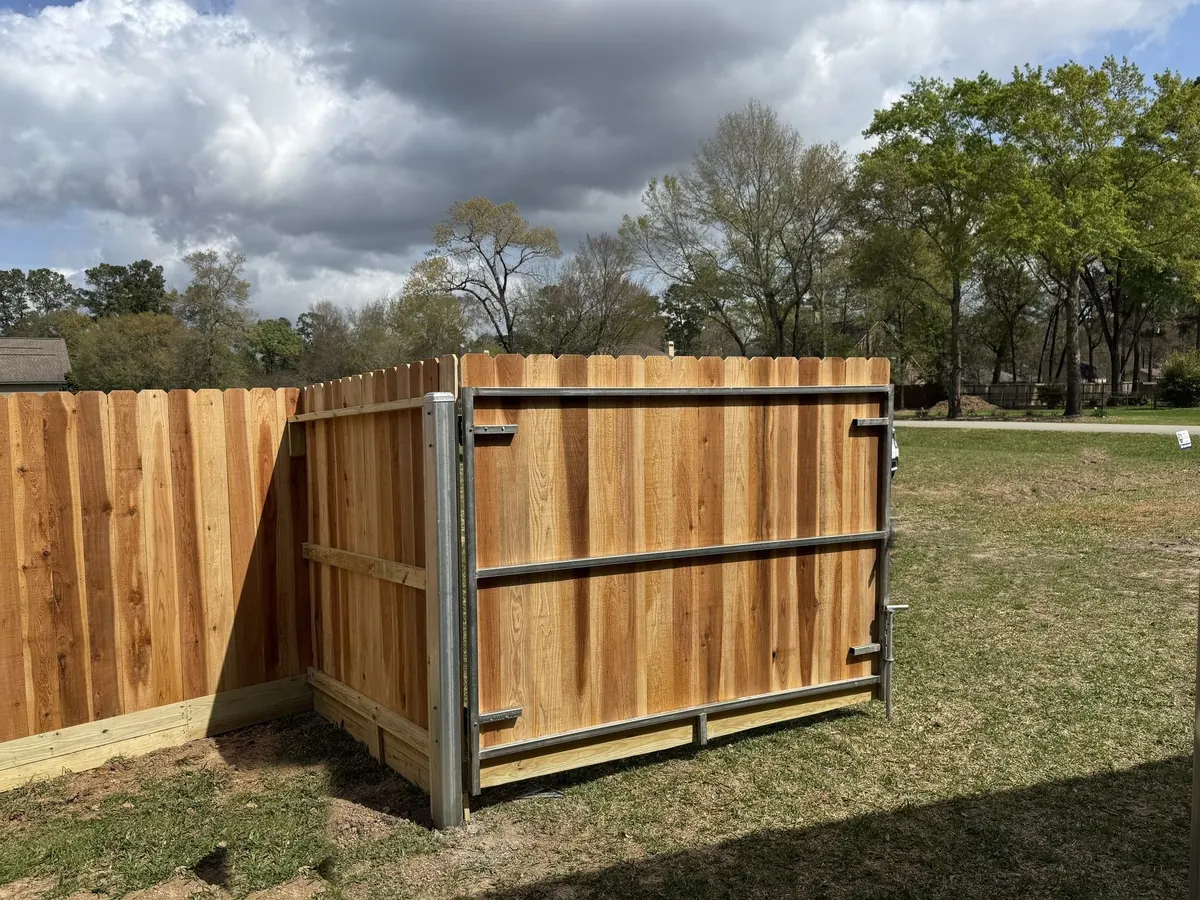
| Wood privacy | Screening dumpsters, neighbors, parking | Warm look; needs upkeep. See wood privacy fences. |
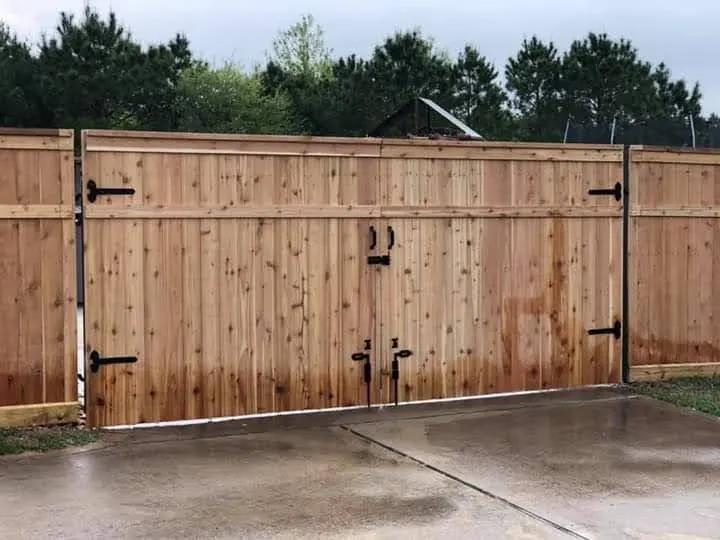
| Automatic and manual gates | Drives, lots and pedestrian entries | Operators, keypads and remotes. See automatic gates. |
Installed ranges for typical jobs, as of September 2026: chain link $15-45 per foot, aluminum $35-60, steel $35-60, wood $24-35 to $30-44. Double drive gates run $500-5,000 depending on size and type, and automation starts at Starting at $2,000 installed. Your campus changes the price with footage, height, gates, grade and access, so we quote the actual site and itemize it.
Budgets, boards and approvals
Church and school projects often need sign-off from a building committee, a board, a diocese, a denomination, a district or a trustee group, and sometimes a bid process. We provide a written, itemized estimate with scope, materials, gates and timeline, photos of the site, and a clear price you can put in front of a committee. If your approval takes weeks, ask us for a written estimate now and call when you are ready. If you need a phased plan, such as the playground this year and the parking lot next, we can quote the work in phases. Public school districts buy through their own purchasing rules, so ask the district whether vendors must register or bid before you ask us for a proposal. Your city or county may also require a permit, and a campus in a deed-restricted community may need association approval. See permits by jurisdiction and property lines and easements. Not sure whether you need a permit? We can help you find out.
Working around services, school days and events
Tell us your calendar. We can schedule work for weekdays when the sanctuary is empty, for school breaks and summers, or for hours when children are not on the playground, and plan the build so the work area is secure at the end of each day. Gates, stakes and open post holes near a play area are a safety issue, and we plan around them. Most fence projects take one to two days once scheduled, and pool fences one to three days. Larger campuses take longer, and we give you the schedule in writing.
How to get a price
- 1Tell us about the campus
Name, address, the area to fence or secure, who uses it and when.
- 2We walk the site
We check the fence line, gates, grade, access, utilities and sightlines, and talk through your plan.
- 3You get an itemized estimate
Footage, height, material, posts, gates and hardware, removal and phasing, in writing for your committee.
- 4Approvals
Board, licensing, city or association sign-off comes before the build.
- 5Build and walk-through
We install, clean up and walk the finished work with your facilities lead.
Sources and where to verify
This page is general information, not legal or security advice. Confirm licensing, fire and security requirements with the agency or professional responsible for your program.
Frequently asked questions
Do you fence churches?
Do you fence schools?
How tall must a child-care playground fence be in Texas?
Can you build to a security consultant's specification?
Can you phase the work around our budget?
Can you work around school days and services?
Do you install automatic gates?
Do you give written estimates for a committee?
Last reviewed September 2026. Local rules and prices change; confirm details with 76 Fence, your HOA and your city or county.