
When a fence leans, sags or rocks in the wind, the cause is usually the post. In Katy, wet clay that swells and shrinks, standing water and rot at the ground line are the usual reasons. Fixing the post can save the rest of the fence, but only if the boards and rails are in good shape.
Signs a post has failed
- The fence leans, or a section rocks when you push it.
- The wood is soft, spongy or crumbling at or below the ground line.
- A post has snapped off at the base after a storm.
- Gates drag or will not latch because the gate post moved.
- Gaps open between boards because rails pulled loose from posts.
Why posts fail in Katy
Clay holds water, swells when wet and shrinks when dry, and that movement loosens posts. Wood posts rot where air, soil and moisture meet, at the ground line. Shallow holes, posts set in dirt instead of concrete, and sprinkler spray on the base speed it up. See clay soil and post depth.
Repair or replace
If a post is solid but only loose, it can sometimes be reset in concrete. If it is rotted or broken, it needs to be replaced, and the rails and boards are reattached to the new post. If most of the posts are rotted, replacing the whole fence usually costs less than repairing it post by post. Be careful of any quick fix that props up the fence without addressing the post.
What a good post repair includes
- Digging out the old post and concrete.
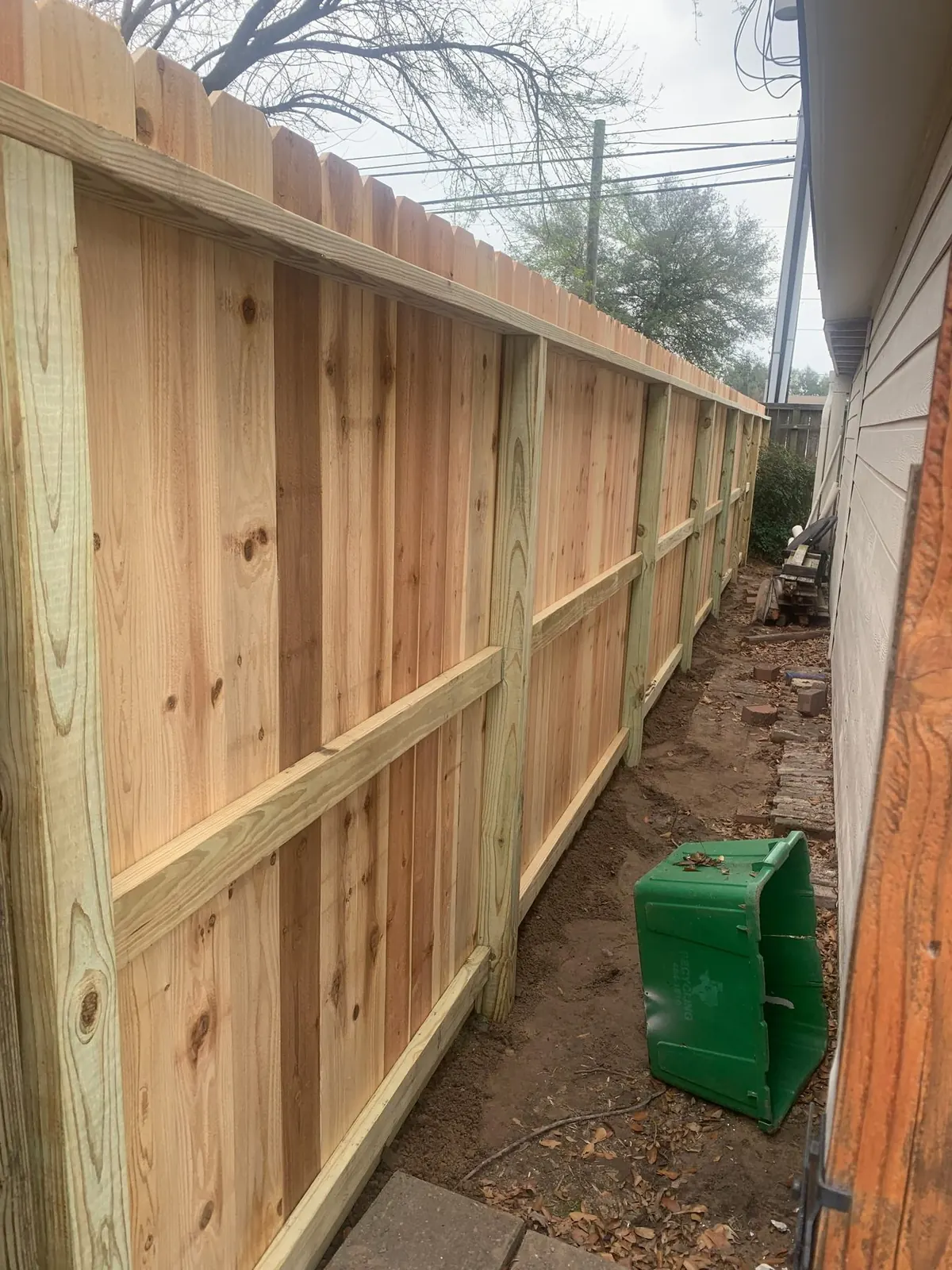
- A new post, set deep enough for your soil and fence height. We set posts 2 feet deep and set them in concrete for a standard 6 ft wood fence.
- Concrete around the post, sloped to shed water.
- Reattaching rails and boards, and re-hanging any gate.
- Cleanup and haul-off of the old post.
Steel posts
Steel posts do not rot, and some of our fences use them. Ask about steel for a replacement post, especially at a gate or corner where the load is highest, and check that your HOA allows it.
After a storm
High winds can snap posts or lift them out of saturated soil. Photograph the damage before you move anything, in case you file an insurance claim. See storm damage repair.
HOA and neighbors
A like-for-like post repair may not need approval, but replacing a full section might. Ask your association. If the fence is shared, tell your neighbor first. See who pays for a shared fence in Texas.
How an estimate works
- 1Tell us about the job
Call, text or book online. Include your street or community.
- 2We look at the site
We check the fence line, grade, gates, access and any HOA or city needs.
- 3You get an itemized estimate
Material, height, gates and scope in writing.
- 4Approval and scheduling
If your HOA or city needs to approve the fence, that comes first. Most fence projects take one to two days once scheduled, and pool fences one to three days.
- 5Build and final walk-through
We install, clean up and walk it with you.
What to ask on the estimate
- Which posts failed and why
- New post material, size and depth
- Concrete and drainage at the base
- Reattaching rails, boards and gates
- Cleanup and haul-off
- Price per post and total
Compare this with the parent site's materials and styles pages at 76fence.com/katy, and see what a fence costs in Katy.
Frequently asked questions
How do I know if my fence post is rotted?
Can a leaning fence be fixed without replacing it?
How deep should a fence post be set?
Should I repair the posts or replace the whole fence?
Do you replace fence posts with steel?
Do you repair fence posts after a storm?
Last reviewed September 2026. Local rules and prices change; confirm details with 76 Fence, your HOA and your city or county.