
Most Katy-area neighborhoods are deed-restricted. That means a fence is not only a construction job, it is a request to a design committee. Getting the paperwork right first is the difference between a fence that goes in on schedule and one that stalls for weeks. This guide explains the usual process, what committees tend to ask, and where the rules come from. It is general information, not legal advice, and your own documents always control.
Where the fence rules live
There are usually three layers. The recorded deed restrictions (sometimes called the declaration or CC&Rs) are the legal base. The association's design guidelines or fence standard add detail: allowed heights, materials, stain colors, cap and trim, and gate styles. And the architectural committee (named ARC, ACC or DRC depending on the community) reviews each request. Builders sometimes add their own fence exhibit for a section, and some sections of the same neighborhood have different rules.
The usual approval steps
- 1Find the current guidelines
Look in the association website's document library or ask the management company. Guidelines are updated, so use the current version, not a copy from a prior owner.
- 2Confirm what needs approval
Ask whether your change is a new fence, a replacement, a stain color change or a gate. Each may be reviewed separately.
- 3Prepare the request
Most committees want a plot plan or survey with the fence line marked, height, material, style, color or stain, gate locations, and a photo or sample. We can help fill in these details.
- 4Submit and keep proof
Submit through the association's portal or management company and keep the confirmation. Record the date.
- 5Wait for a written decision
Do not schedule the installation until you have the approval in writing, including any conditions.
- 6Build to the approval
If the fence differs from what was approved, ask for a revision before you build.
What committees commonly look at
- Height: many associations set a maximum for side and rear fences and a lower limit or a ban in front.
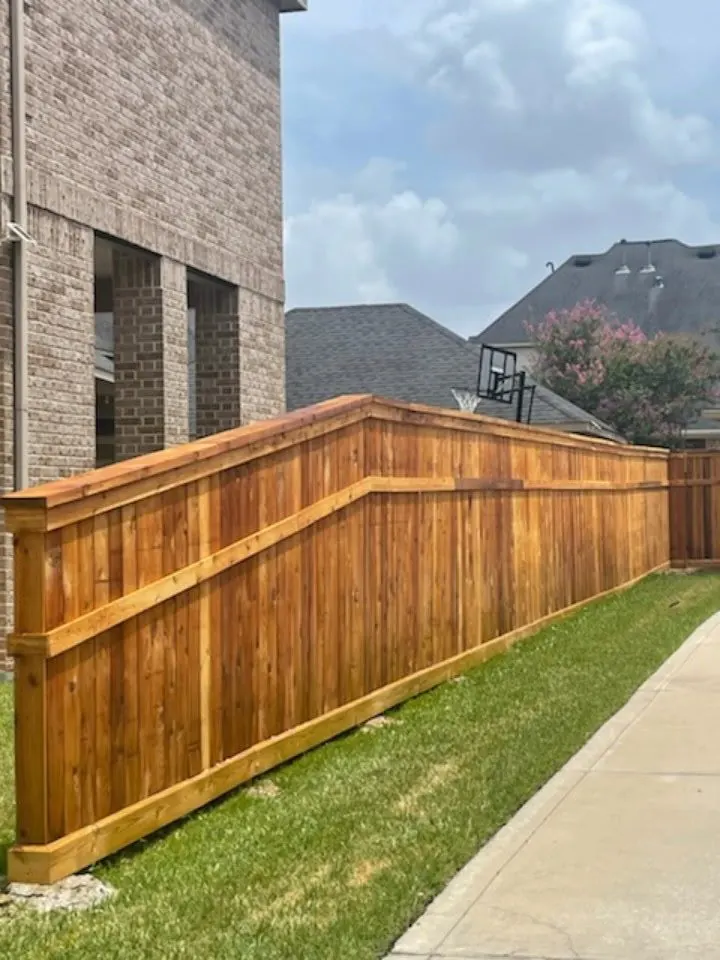
- Material and style: wood, iron and aluminum are common approved materials, vinyl is often restricted, and chain link is often not allowed.
- Finish: natural, clear seal or specific stain colors. Some communities require you to keep it finished.
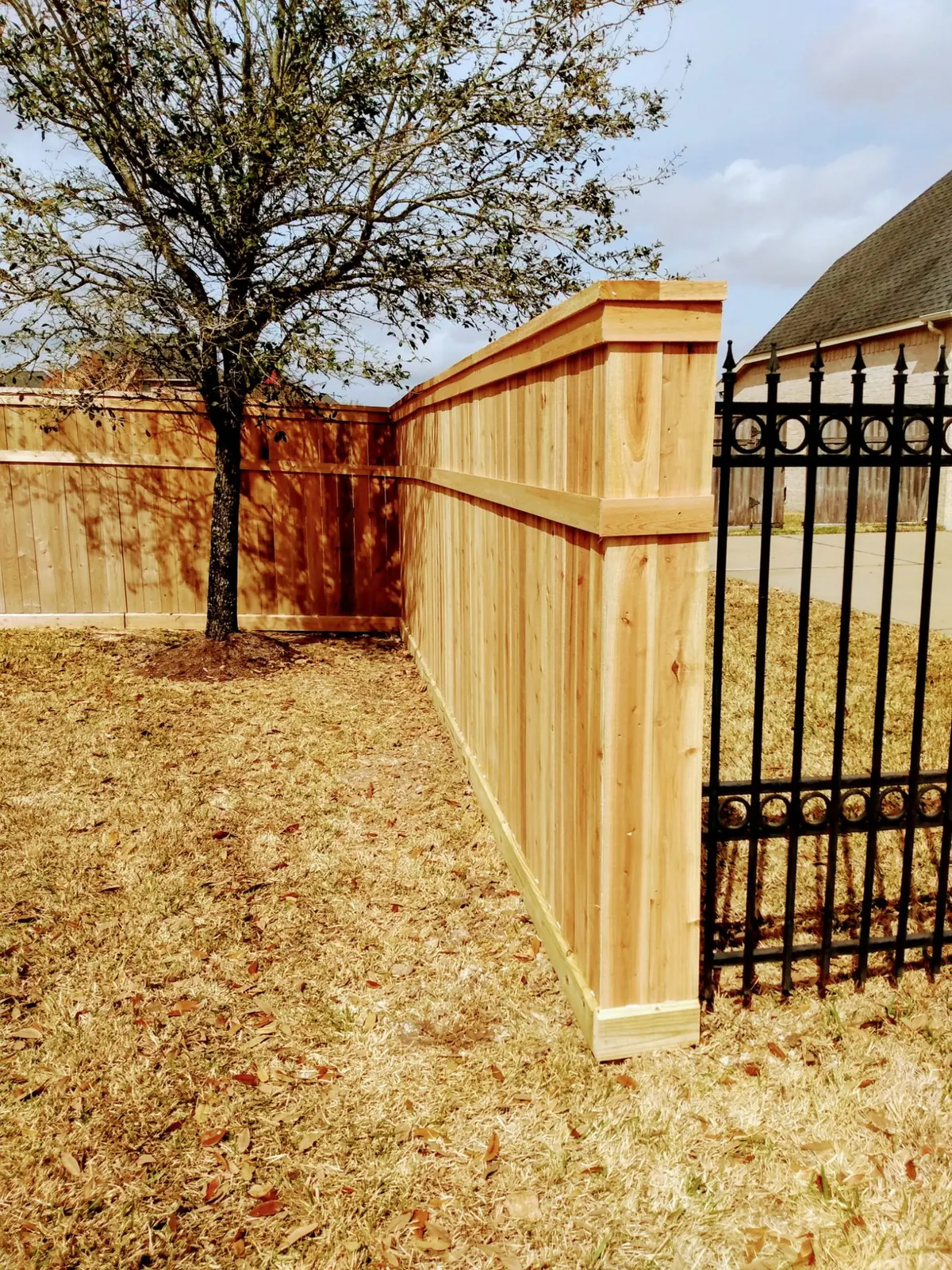
- Cap and trim, and good side out: some communities require the finished side to face the street or neighbor.
- Location: setbacks, corner-lot visibility and lots that back to lakes, greenbelts or golf courses, where open-view fences are often required.
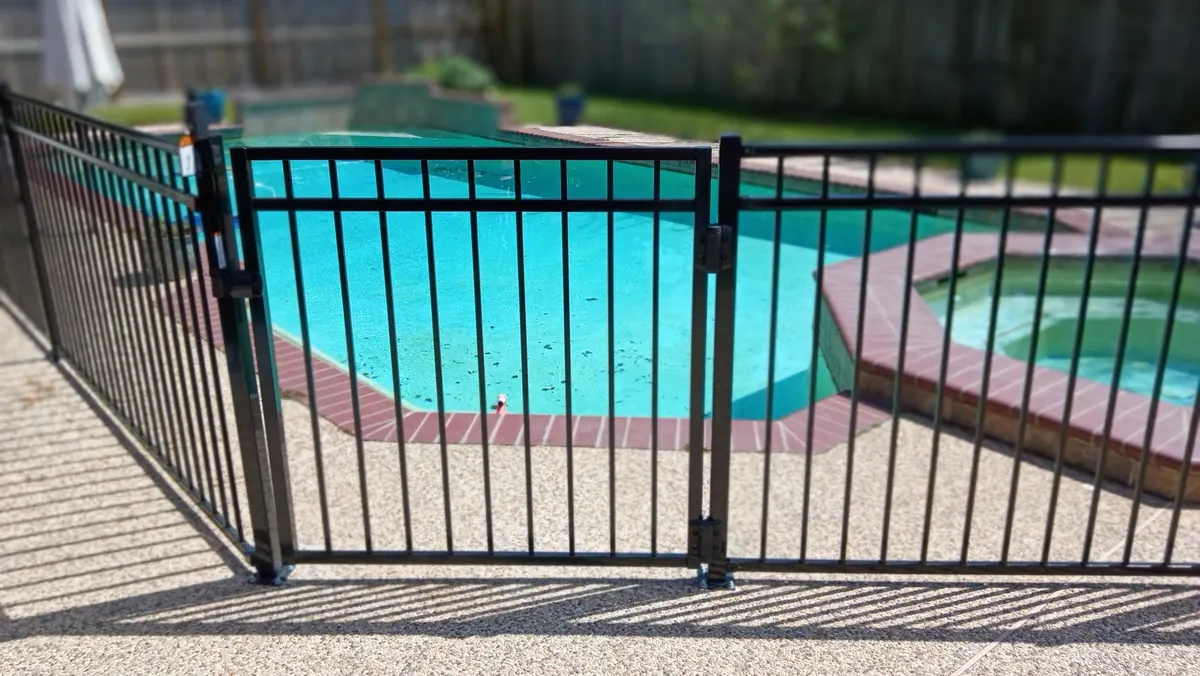
- Gates: width, swing direction and hardware color.
Texas law that affects HOA fence rules
Chapter 209 of the Texas Property Code governs many residential associations, including notice and hearing rights before certain enforcement actions. Some topics are addressed directly by statute, so an association cannot always enforce a fence rule as written. Because statutes change, we do not summarize them beyond this: talk to your association, a Texas attorney or the Texas Attorney General's office if you have a dispute. See the sources below.
Also plan for the neighbor side of the job. See who pays for a shared fence and property lines and easements.
Get help before you submit
Tell us your community when you request an estimate. We can walk the fence line, discuss material options that fit typical guidelines, and describe the fence in the detail a committee asks for. See the pages for Cinco Ranch, Cross Creek Ranch, Firethorne and Elyson, or the full service area.
Sources and where to verify
Frequently asked questions
Does my HOA have to answer within a set number of days?
Can I build a fence the HOA denied?
Will 76 Fence submit the HOA application for me?
Do I need approval for a like-for-like replacement?
Last reviewed September 2026. Local rules and prices change; confirm details with 76 Fence, your HOA and your city or county.