Ask a Katy homeowner why fences fail and the answer is often the ground. Much of the Houston region, including large parts of Fort Bend and Harris counties, sits on clay that changes volume with moisture. That movement is slow, but over several seasons it pulls posts out of line. Understanding it helps you choose a fence that lasts.
What expansive clay does to a fence
When clay soaks up water after a heavy rain it swells, and when it dries in a Texas summer it shrinks and cracks. Posts set in that soil get pushed and released again and again. Shallow posts move the most. A fence that was straight at install can develop leaning sections, gaps under the boards and gates that no longer close properly.
The other cause: rot at ground level
Wood posts fail where air, water and soil meet. Rain, sprinklers and slow drainage keep that zone wet, and untreated or shallowly treated wood breaks down there first. A post can look fine above ground and be weak underneath.
What helps
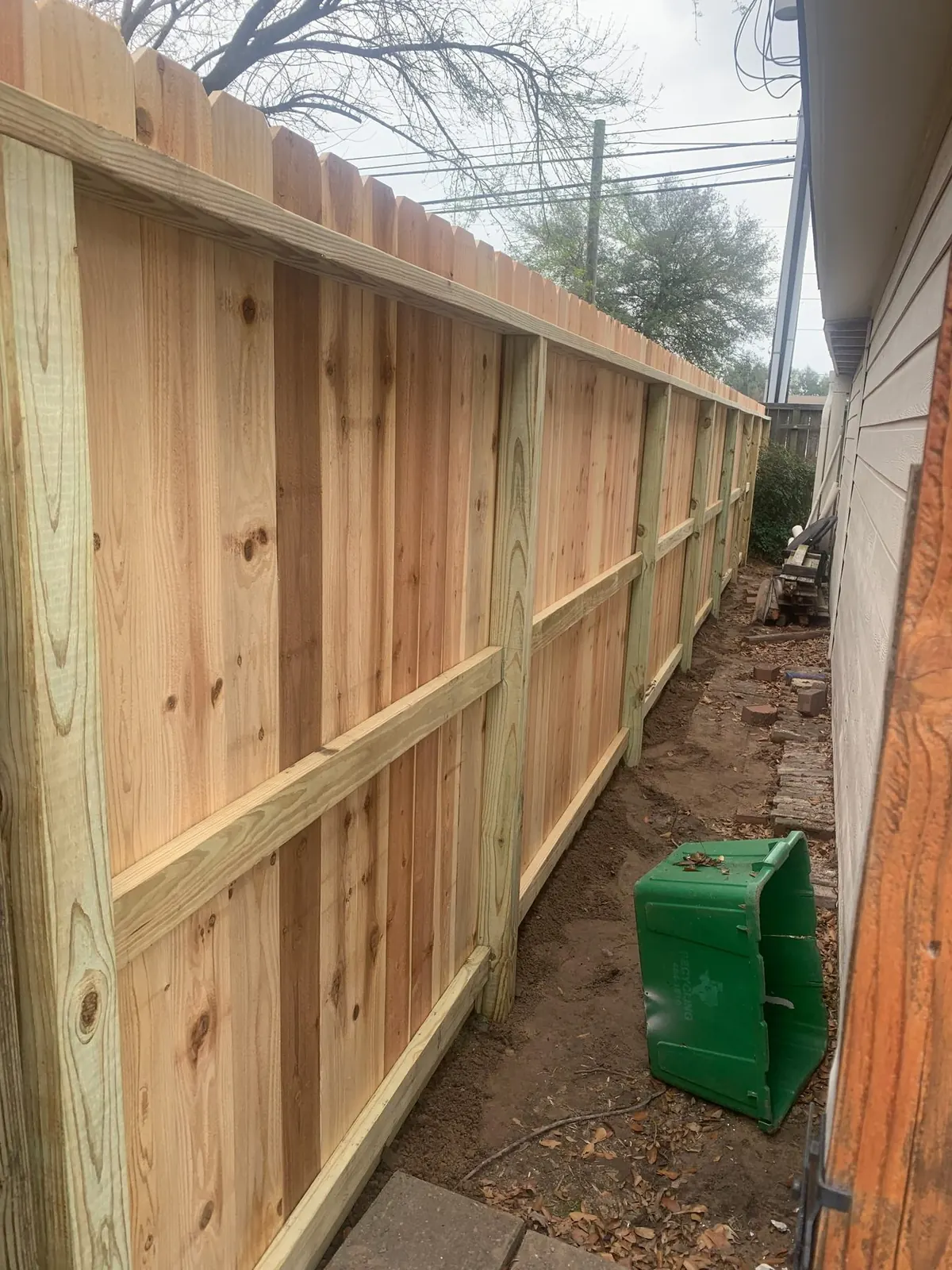
- Deeper, properly sized posts. Set below the zone where the soil moves the most, with extra depth for gates and tall fences.
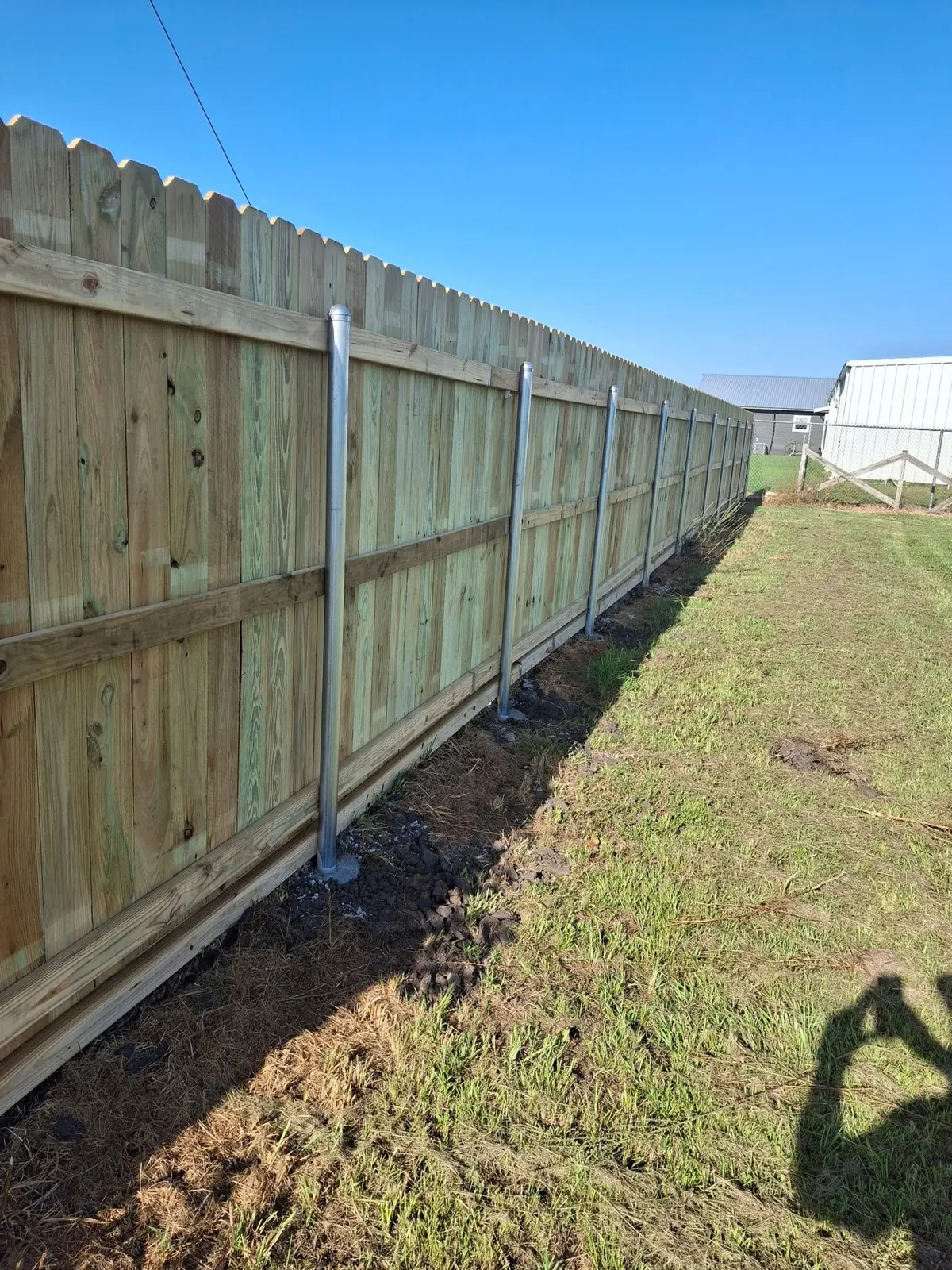
- Post material. Pressure-treated wood is common. Steel posts avoid rot. Ask what your contractor uses.
- A good footing. Concrete that is shaped to shed water away from the post.
- Post spacing. Closer spacing spreads wind and movement loads.
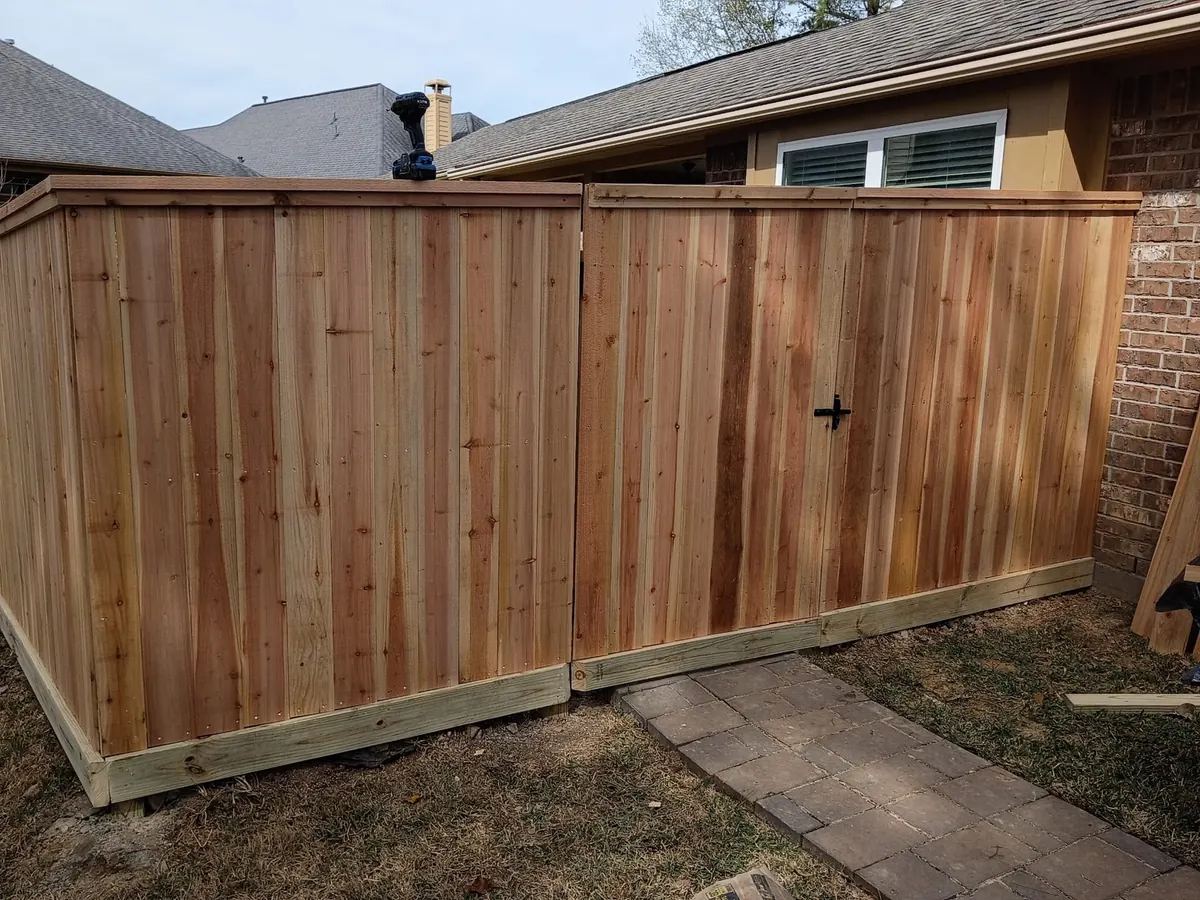
- Strong gate posts. Gates carry weight and swing, so their posts need to be larger and deeper.
- Drainage. Keep sprinklers off the fence line and avoid pooling at posts.
Our standard: We set posts 2 feet deep and set them in concrete for a standard 6 ft wood fence.
Straightening a leaning fence
A leaning fence with sound posts may be braced or reset. If posts have rotted at the base, replacing them is the lasting fix. See fence repair and replacement cost.
Sources and where to verify
Frequently asked questions
Why do fence posts lean in Katy?
Are steel posts better than wood?
How deep should fence posts be?
Does concrete help?
Last reviewed September 2026. Local rules and prices change; confirm details with 76 Fence, your HOA and your city or county.