
Board-on-board and shadowbox fences look alike from across the street, and the names get mixed up. The difference is where the boards sit and what that does for privacy, wind and cost. In Katy, where wood shrinks in the summer heat and storms push hard on solid fences, that difference matters. Use this page to decide before you ask for a quote.
What each one is
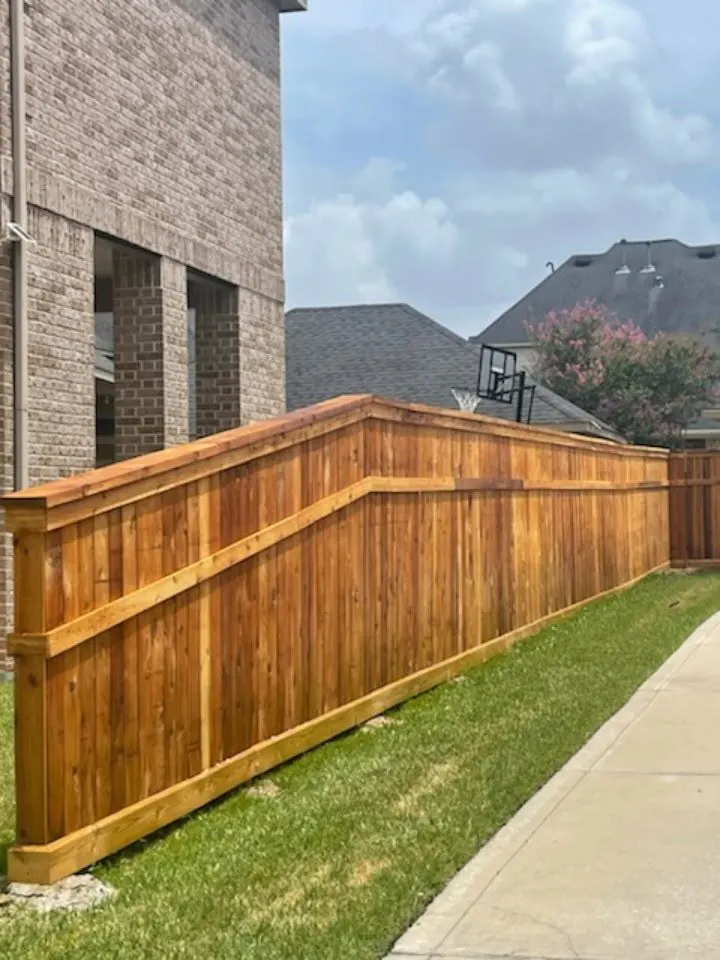
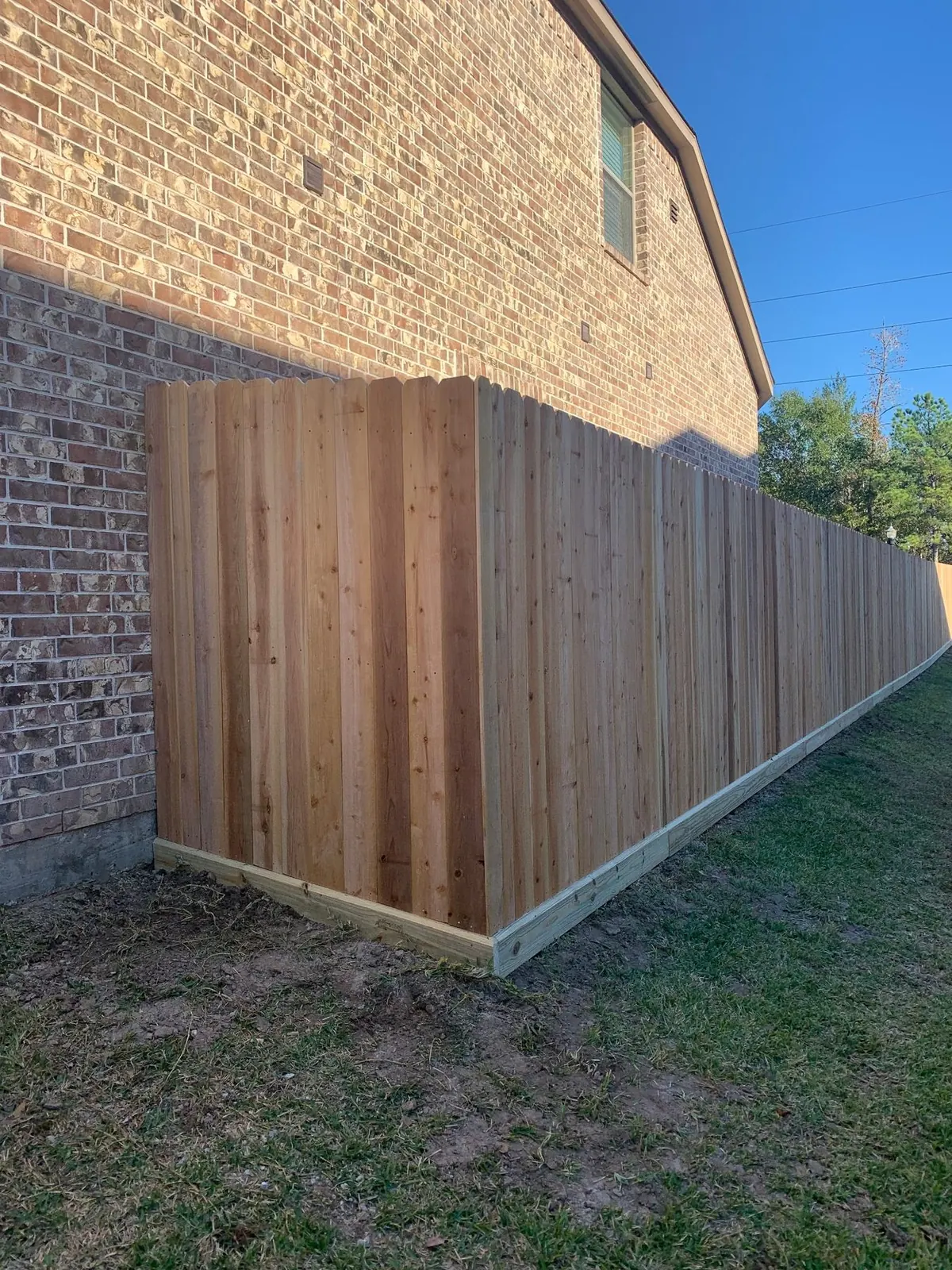
Board-on-board uses two layers of boards. The first layer is set with a gap, and the second layer covers the gaps from behind or in front. When the wood shrinks, no gaps show, so you get full privacy for the life of the fence. We describe it on our wood privacy fence page as overlapping boards so no gaps show when the wood shrinks.
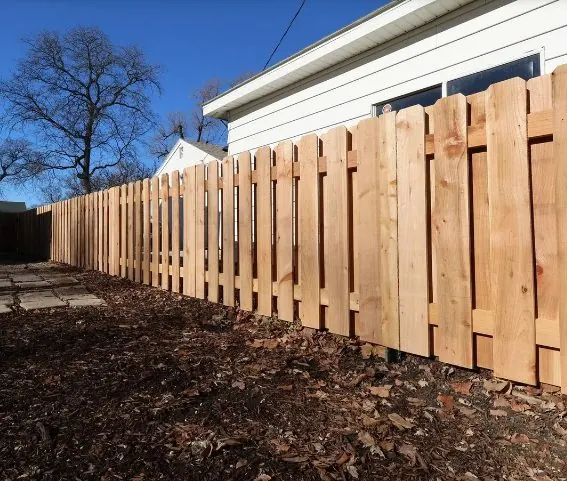
Shadowbox is a semi-privacy design where the boards alternate from one side of the rails to the other. It blocks the view when you look straight at it, shows parts of the other side at an angle, lets air through and looks the same from both sides (Angi).
Side by side
| Board-on-board | Shadowbox | |
|---|---|---|
| Privacy | Full. Overlap hides the gaps, even as the wood dries | Partial. Good head on, you can see through at an angle |
| Wind | Acts like a solid wall, so it takes the full load | Gaps let wind pass, which reduces the pressure |
| Light and airflow | Little | More |
| Looks from the neighbor's side | Depends on where the rails are; one side shows the rails | Looks the same from both sides, a plus with neighbors and many HOAs |
| Material and labor | More lumber than a single-layer fence | More lumber and labor than a standard fence, so it costs more (Angi) |
| Staining and cleaning | Straightforward | Harder to stain and clean because of the overlap (Angi) |
| Best for | Pool decks, busy streets, neighbors close to your windows | Open lots, windy yards, smaller yards, front sides |
How to choose
- 1Start with the problem
Do you want to hide a view, calm the wind, or just mark a line? If privacy is the goal, board-on-board is the safer choice. If light and wind matter, look at shadowbox.
- 2Check your HOA
Some associations require the finished side to face out or limit board spacing. Shadowbox satisfies a two-sided rule. See the HOA approval guide.
- 3Think about the wood
Wood moves with Katy's heat and humidity. A single-layer fence opens gaps as it dries. Board-on-board covers that. Cedar vs pine affects how the boards weather, see cedar vs pine.
- 4Ask about the posts
Overlapping boards add weight and wind load. Post depth and spacing matter more than which style you pick. See clay soil and post depth.
- 5Compare quotes on the same scope
Ask each company to price the same height, style and number of gates. See the cheapest quote problem.
What it costs
Ranges for a six-foot wood fence, installed, as of September 2026: about $24-35 per linear foot in pressure-treated pine and $30-44 in cedar. Both styles use more lumber than a plain single-layer fence, so expect to land higher in the range, and ask for your price in writing. We explain what moves price on what a fence costs in Katy.
Sources and where to verify
Frequently asked questions
Is board-on-board more private than shadowbox?
Which holds up better in wind?
Which costs more?
Do I need HOA approval?
Which one is easier to maintain?
Do you build both?
Last reviewed September 2026. Local rules and prices change; confirm details with 76 Fence, your HOA and your city or county.