
By October, Katy fences have been through months of heat, a hurricane season and, often, a dry spell that cracks the clay around the posts. Fall is a good time to look the fence over: the weather is milder, the wood is drier than in spring and a fix now beats a fall-down fence in a winter storm. Use this checklist, then see our full seasonal fence maintenance checklist.
A ten-point fall checklist
- 1Walk the whole line
Look for leaning posts, bowed sections, loose boards and gaps at the bottom.
- 2Test every post
Push and probe. Clay shrinks in a dry summer and leaves gaps around posts. See clay soil and post depth.
- 3Check the ground line
Press a screwdriver into the wood where it meets the soil. Soft wood means rot or insects. See termite damage.
- 4Check rails and fasteners
Split rails, rusted nails and popped screws are early warnings.
- 5Test the gates
Open and close each gate. Re-hang sagging gates before they warp. See gate repair.
- 6Clear the fence line
Pull back vines, mulch and soil from the boards, and trim branches that touch or hang over the fence.
- 7Check the sprinklers
Water hitting the boards keeps them wet and speeds rot.
- 8Look at the finish
Water should bead on the wood. If it soaks in, the stain or sealer has worn. See fence staining.
- 9Clean if needed
- 10Plan repairs before the next storm
Fix leaning posts now. See storm damage.
Why fall is a good time for staining
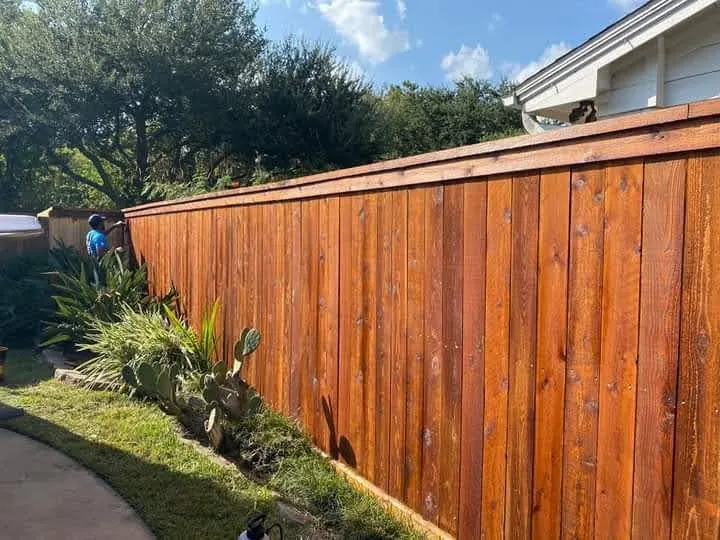
Spring is often called the ideal time to clean and stain wood because the sun speeds drying. Fall works too, as long as cold weather has not arrived (Angi). In Katy, the milder days of October and November give you dry weather without the summer heat that can make stain dry too fast. Wood has to be dry before it is stained, so check the forecast. Our guidance for new and older fences is on fence staining. If your HOA names a stain color, ask which before you buy.
Material by material
| Fence | What to check in the fall |
|---|---|
| Pressure-treated pine | Checking, warping and loose boards after summer. Re-seal or stain if bare. |
| Cedar | Gray weathering is normal; sealer or stain protects it. Check posts and the bottom rail. |
| Vinyl | Wash dirt and mildew with mild soap and water, and check that posts have not shifted. See vinyl fences. |
| Aluminum and steel | Look for scratches that expose metal on steel. Touch up rust early. See aluminum vs steel. |
| Chain link | Tension wire, loose ties and gates. See chain link fences. |
| Gates and openers | Hinges, latches, sensors and battery backup. See automatic gates. |
When a fall check turns into a bigger job
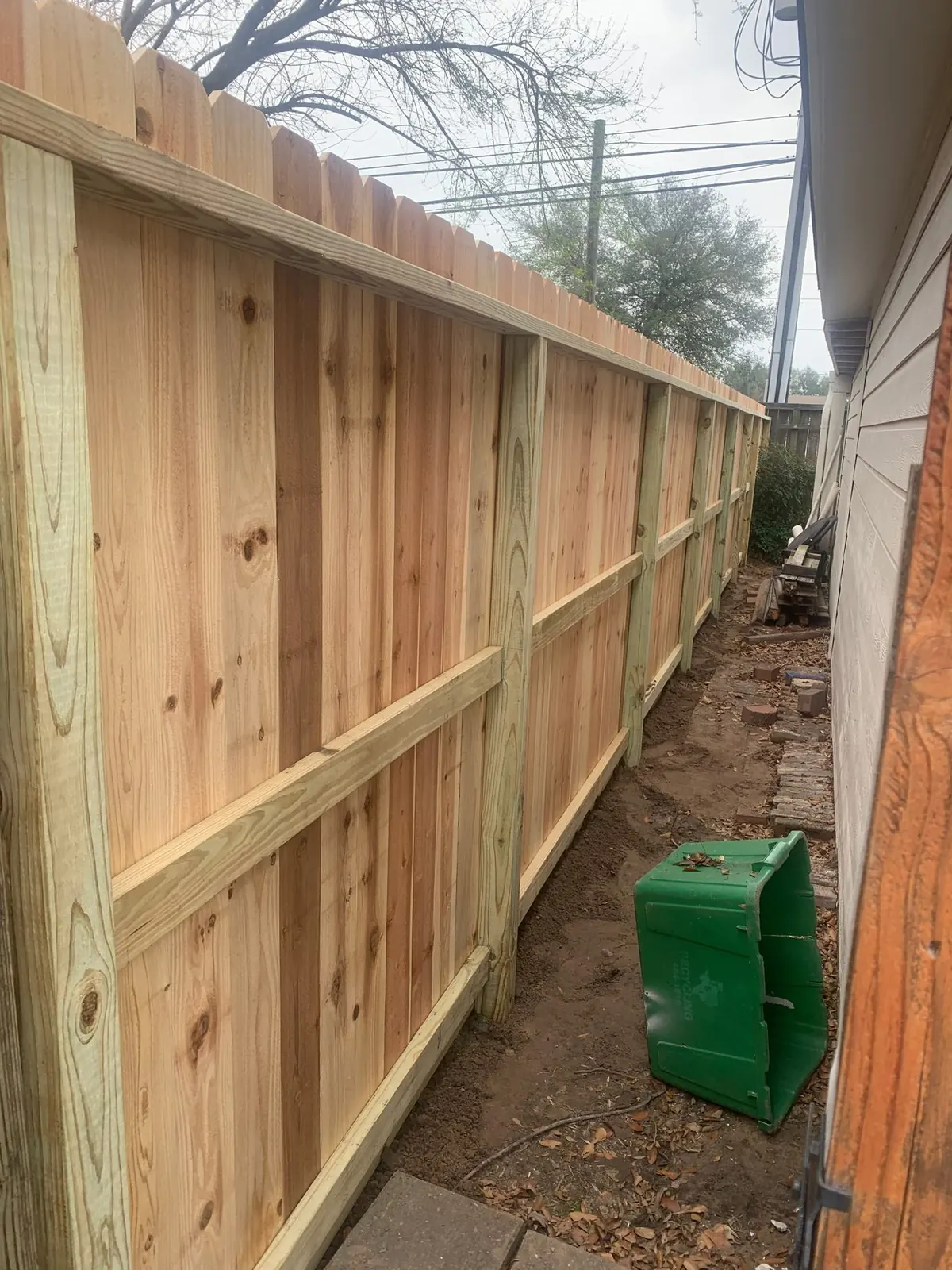
If you find many loose or rotted posts, widespread rot or a fence that is near the end of its range, a repair may not be the right call. See repair or replace and how long a fence lasts. If you decide to replace, check with your HOA first: HOA approval guide.
Sources and where to verify
Frequently asked questions
When should I stain a fence in Katy?
What should I check on my fence in the fall?
Can clay soil damage fence posts in a dry summer?
Do I need HOA approval to repair my fence?
How quickly can you come out?
Last reviewed September 2026. Local rules and prices change; confirm details with 76 Fence, your HOA and your city or county.